




Choosing the best AI detector for teachers has become just as essential as plagiarism scanning or classroom assessment tools. In 2026, students frequently rely on AI to brainstorm essay drafts, polish sentence transitions, or clean up grammar before submission. Even when used ethically, this creates a new responsibility for educators: verify originality, assess tone risk, and review assignment integrity step by step.
However, academic convenience introduces a major problem: teachers must evaluate whether writing is natural, student-authored, and aligned with the course assignment. Some detectors mislabel genuine student work as AI-generated, while others fail to recognize repetitive machine phrasing or predictable structure. False positives create confusion, while weak detection creates uncertainty.
The best AI detector for teachers should go beyond simple classification. It should explain why a sentence feels algorithmic, help students revise tone naturally, identify structural redundancy, evaluate plagiarism, and support document-level uploads without forcing instructors to manually review every page.
This guide compares the five strongest classroom-ready detectors and explains which teachers should use in different instructional environments.
How to Choose the Best AI Detector for Teachers — Free vs Paid Options
1. Free Classroom Tools Help With Quick Grading Checks
Free AI detectors are useful for immediate tone screening, informal writing evaluation, or quick verification before grading short assignments. Most free systems are browser-based, require no technical setup, and offer instant probability scoring.
However, free detectors rely on limited datasets and weaker linguistic pattern analysis. They misread research summaries, historical reports, policy essays, or technical writing as machine-generated even when students wrote them manually.
2. Free Detectors Struggle With Fairness and Academic Tone
Academic writing naturally uses formal transitions, structured analysis, and predictable paragraph hierarchy. Free AI detectors often treat this as algorithmic because they are trained on conversational writing patterns—not academic rhythm.
This means many students receive false positives even when they wrote their essays independently.
3. Paid Classroom Detectors Provide Deeper Structural Analysis
Paid systems trained on larger datasets evaluate sentence-level probability, transitional symmetry, emotional pacing, and repetitive cadence. They distinguish between natural student repetition and predictable machine phrasing with greater precision.
4. Combined AI + Plagiarism Detection Helps Teachers Evaluate Originality
The strongest best AI detector for teachers does not just classify—it also identifies plagiarism fragments and structural redundancy within the same report. This protects assignment authenticity and improves instructional clarity.
Teachers avoid switching between multiple review platforms and receive a unified document assessme.
5. Batch Review Helps Teachers Manage Large Course Workloads
Grading dozens or hundreds of papers each semester is time-intensive. The best paid detectors allow teachers to upload full PDFs, review multiple essays at once, automate tone scanning, and verify originality without manually opening each file.
For schools, colleges, and online learning platforms, batch detection is extremely valuable.
6. Teachers Need Tools That Support Revision, Not Punishment
Detection alone often leaves students helpless if they receive a risk score without guidance. The real educational value lies in remediation—tools that help students rewrite risky paragraphs, improve tone, and preserve academic meaning without forcing them to start over.
Classrooms benefit when detectors act as instructional support, not disciplinary tools.
The 5 Best AI Detector for Teachers in 2026
Here are the top school-ready tools to evaluate in depth:
- AISEO — Best for detection + plagiarism + full document cleanup
- Humanize AI — Best for rewriting + tone remediation
- Originality.ai — Best for instructors, schools, and large course loads
- GPTZero — Best for student essay evaluation and sentence-level fairness
- Copyleaks — Best for enterprise education, LMS integrations, and deep accuracy
Every tool fits a different teaching environment, so let’s break them down clearly.
1. AISEO — Best Overall for Detection, Plagiarism, and Educational Cleanup
AISEO stands out as the best AI detector for teachers who review long assignments, online coursework, or research-driven essays. It combines rewriting, detection, readability improvement, plagiarism screening, and natural academic structure cleanup.
AISEO
Key Features of AISEO
Detection + Rewrite
AISEO identifies risky structure and rewrites only what feels algorithmically repetitive. Unlike paraphrasers, AISEO protects academic tone and citation logic.
Detection + Rewrite
Plagiarism Safety
AISEO cleans repeated phrasing or duplicated structure while keeping research meaning intact. This is ideal for essays, case studies, literature reviews, and policy summaries.
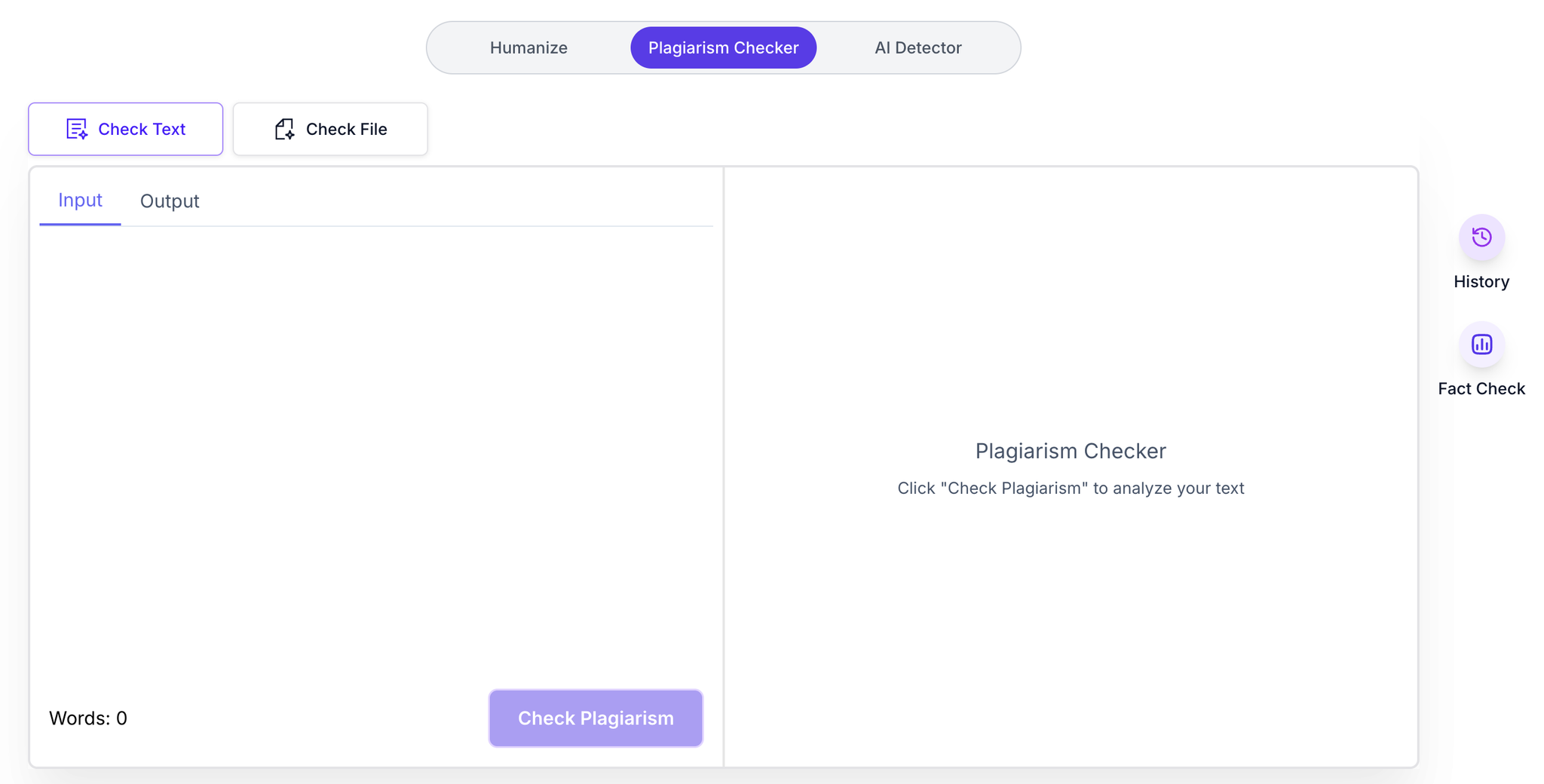
Integrated Plagiarism Checker
Readable Academic Structure
Teachers can improve clarity, reduce redundancy, and improve narrative pacing without damaging academic integrity.
Readable Academic Structure
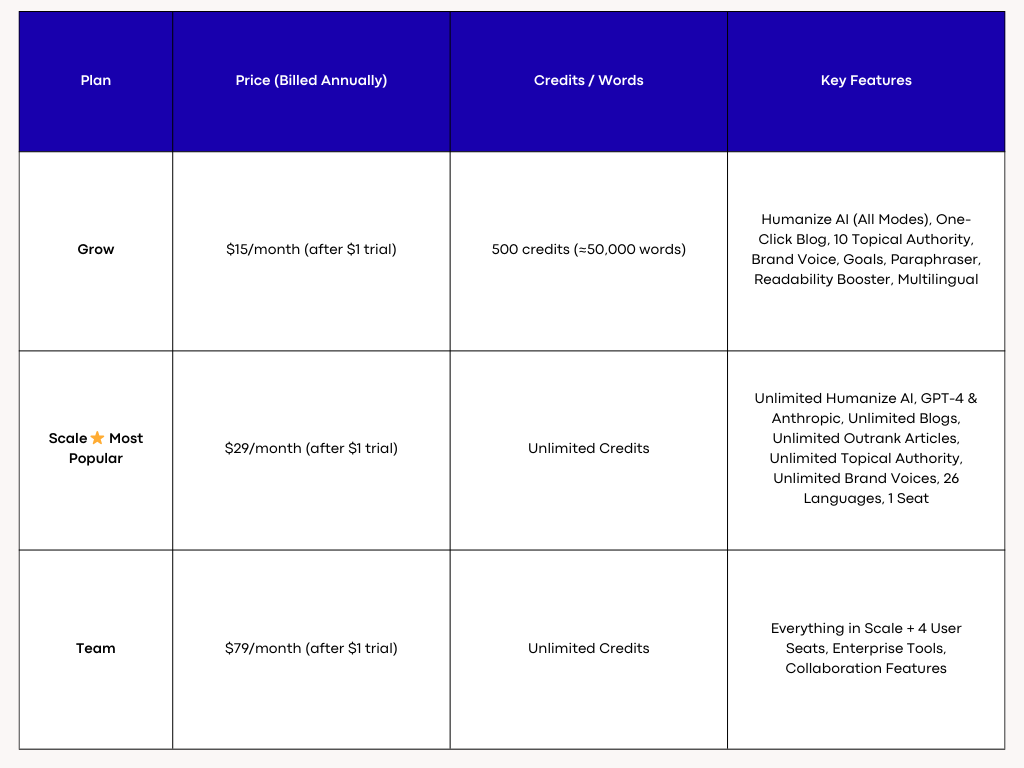
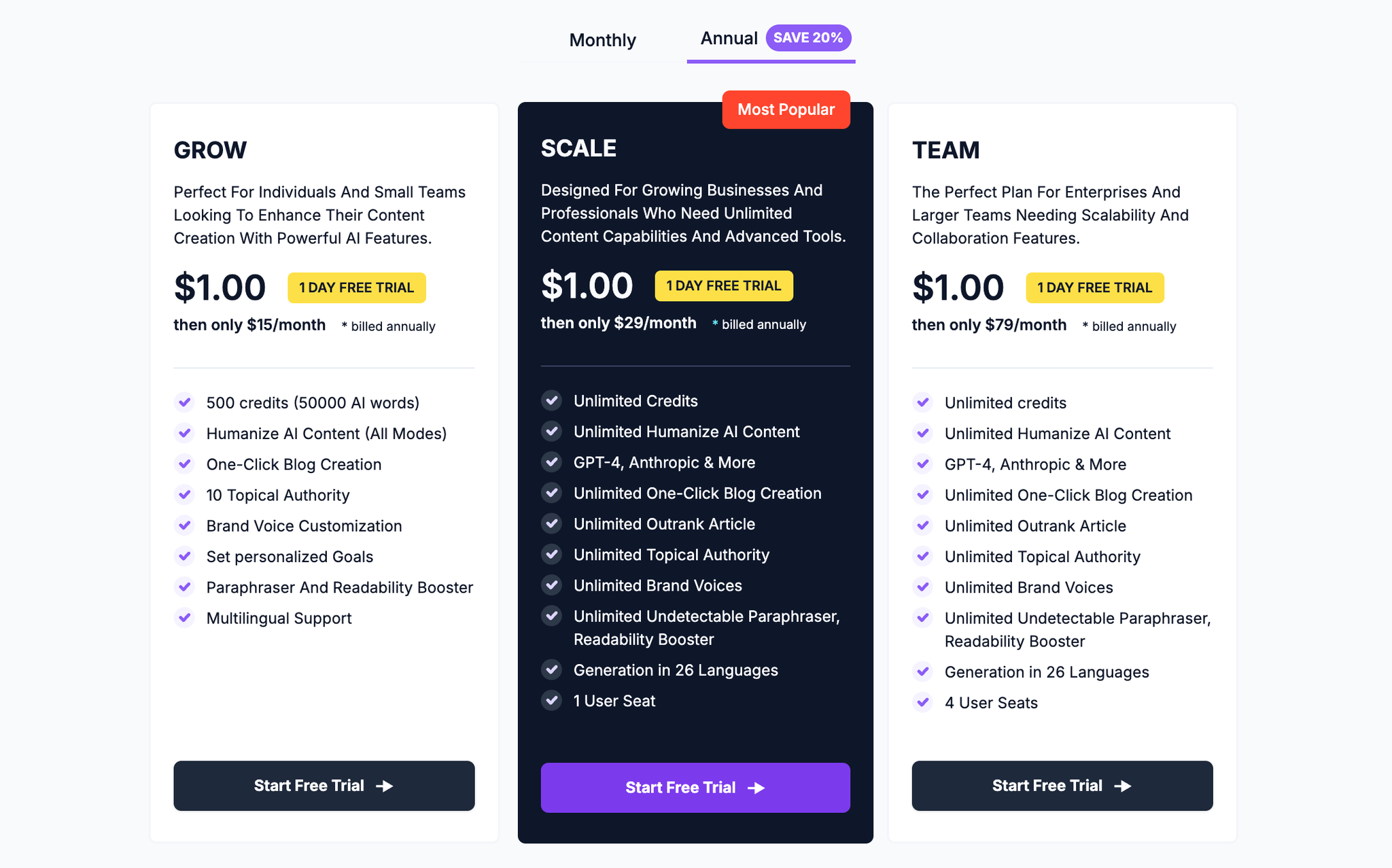
Pricing
AISEO Pricing Table
AISEO Pricing
2. Humanize AI — Best for Revision-Friendly Academic Integrity
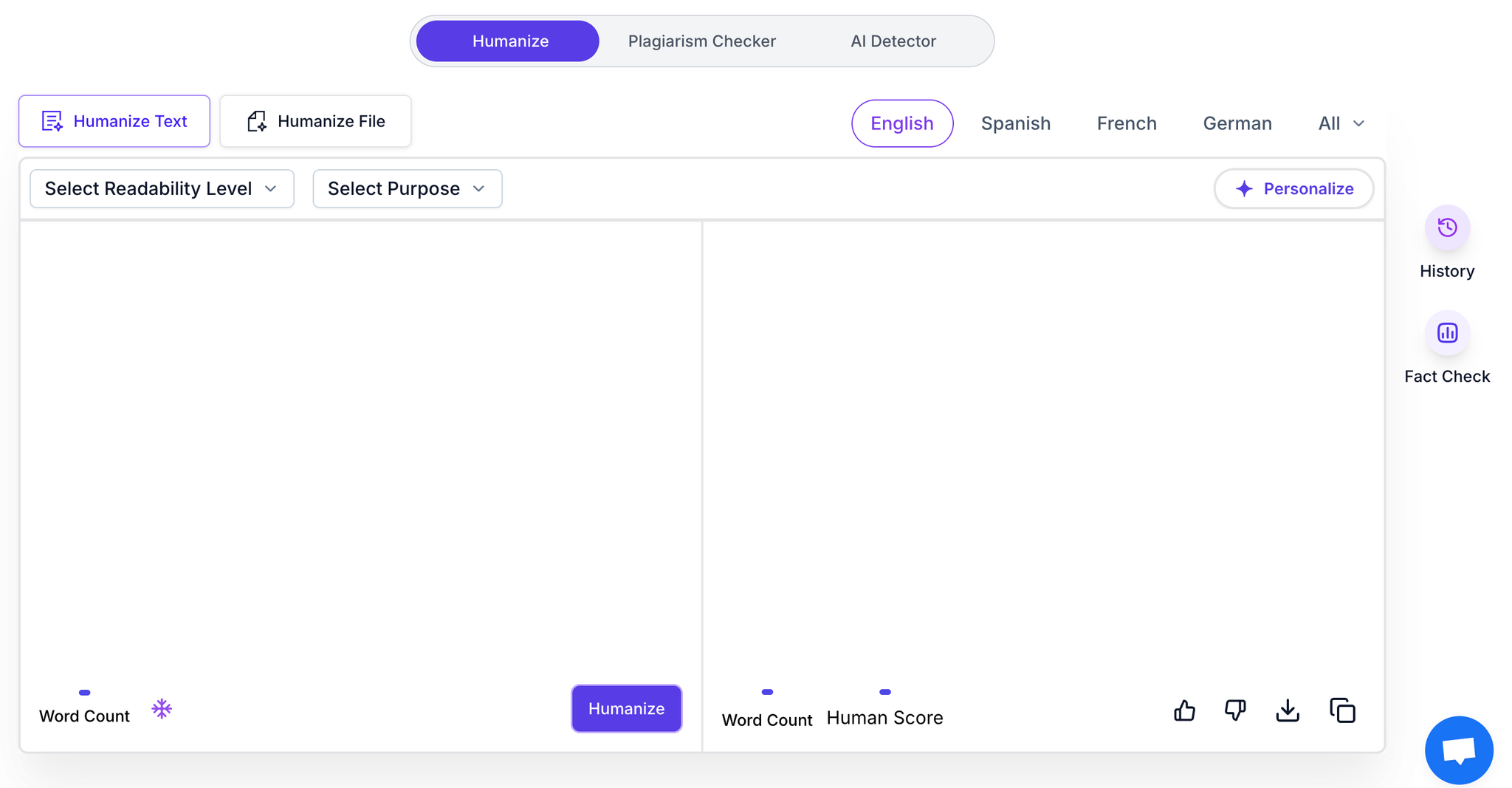
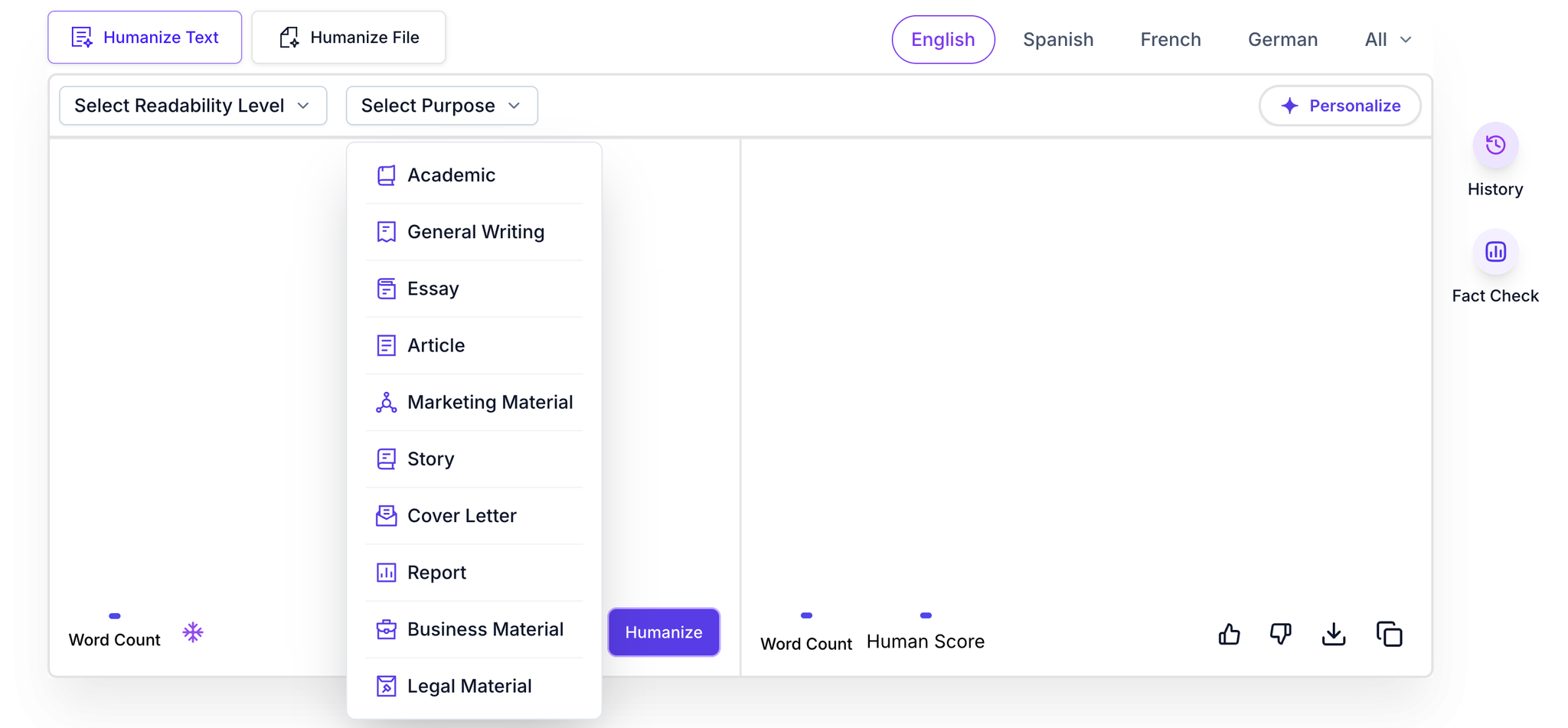
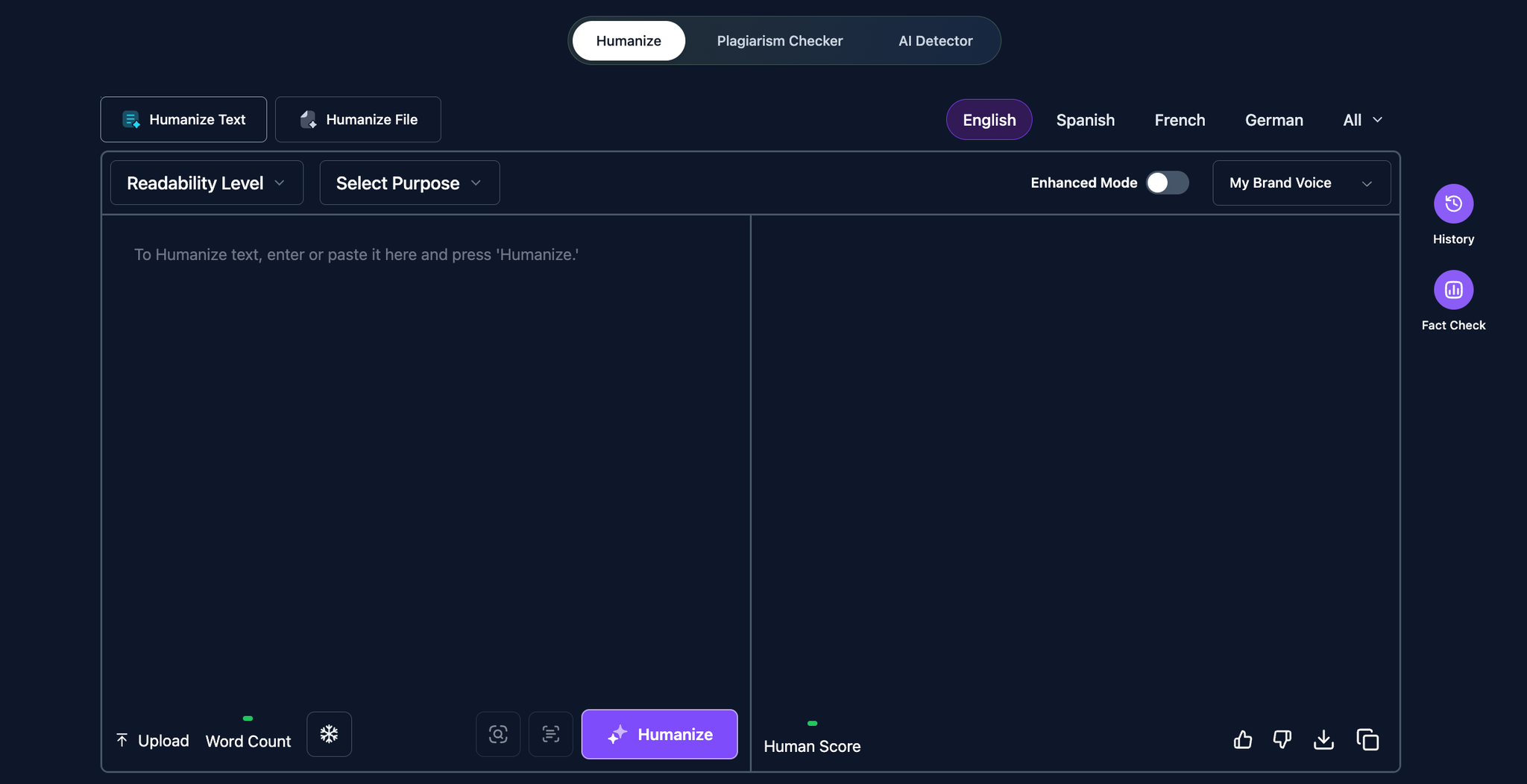
Humanize AI is the best AI detector for teachers who want clear scoring and natural rewriting in the same workflow. Instead of punishing students, it identifies AI-like patterns, explains tone risk, and rewrites only what needs improvement—preserving academic meaning and citation accuracy.
Humanize AI Text
Key Features of Humanize AI
Human-Style Rewrite Engine
Humanize AI emphasizes academic pacing, structural clarity, emotional variation, and sentence-level unpredictability—not word scrambling. Instead of scrambling vocabulary, it improves rhythm naturally so paragraphs feel authentic and authorial.
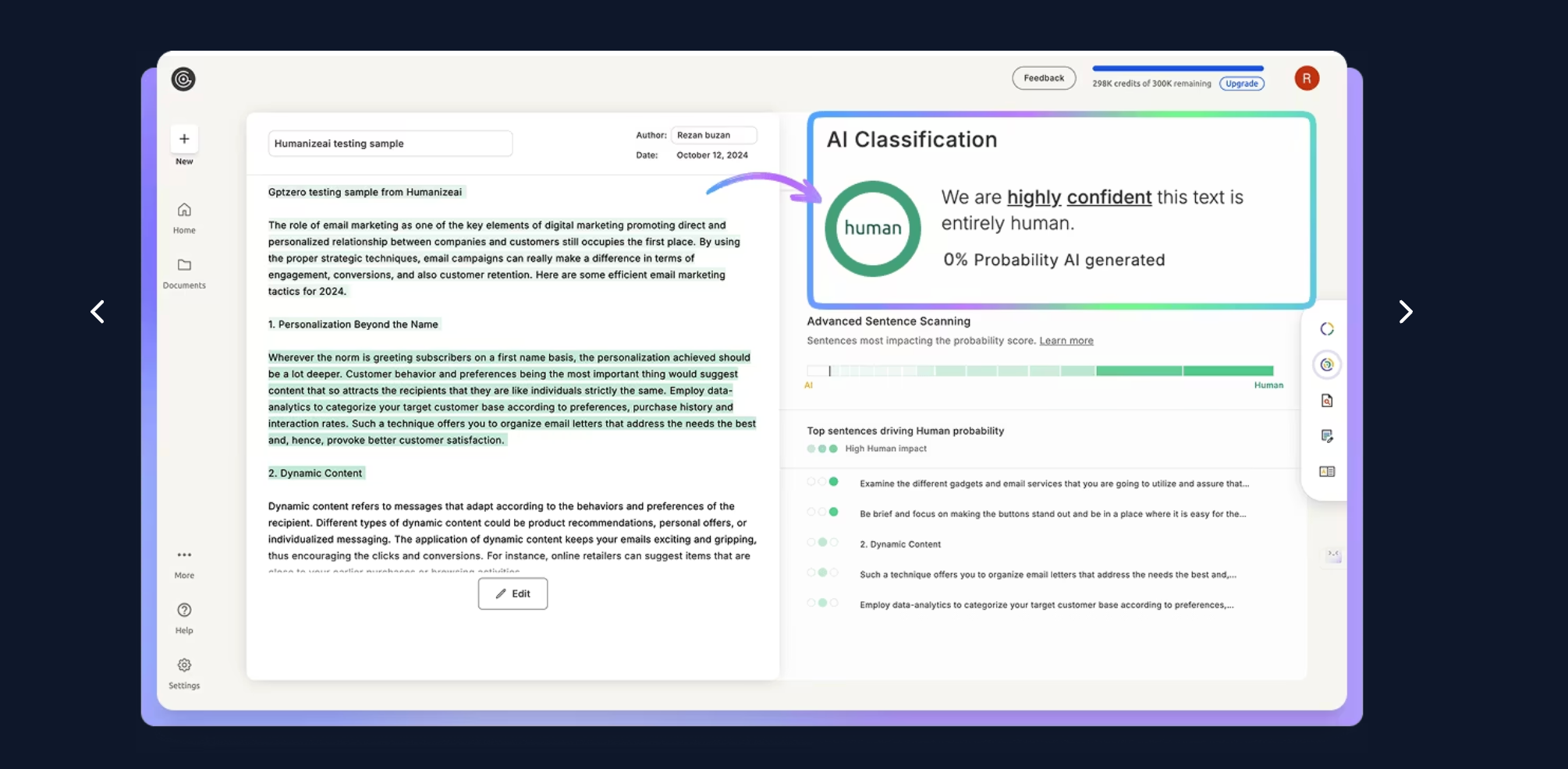
Human-Style Rewrite Engine
Transparent Human Score
Humanize AI provides detection clarity, explains why sentences sound artificial, and highlights only the lines needing revision. Teachers get actionable guidance instead of ambiguous risk scores.
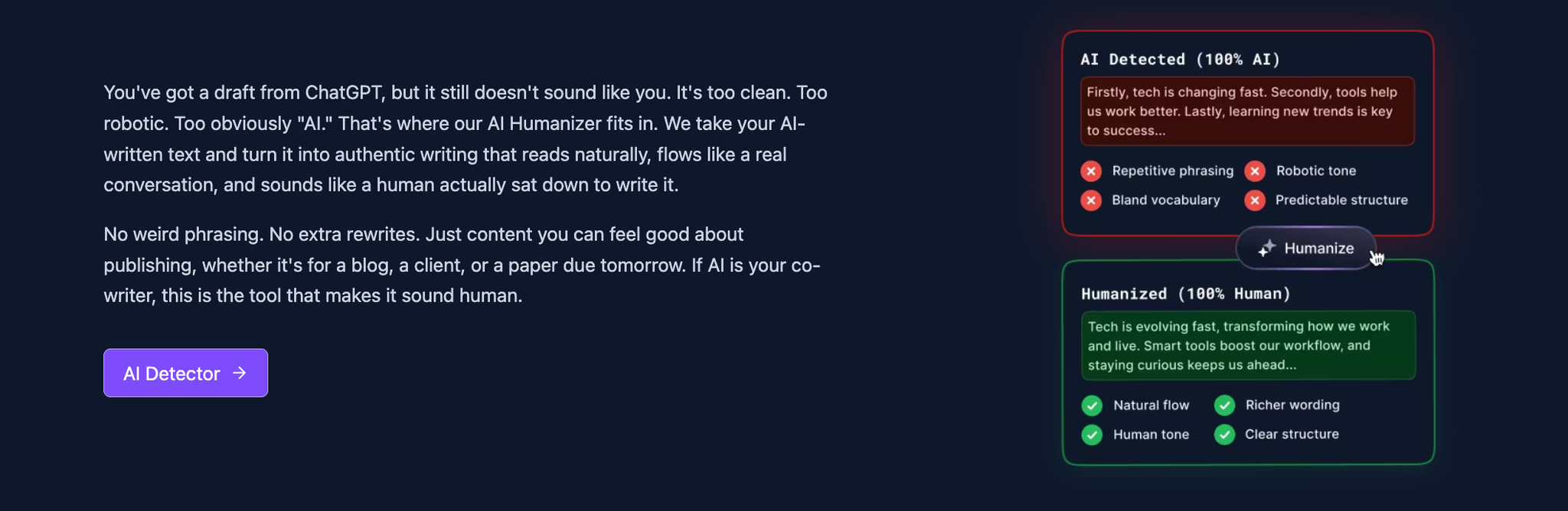
Clear Human Score Transparency
Document Upload for Full Assignments
Teachers can upload essays, lab reports, case studies, and dissertations without breaking them into small chunks. Tone stays consistent.
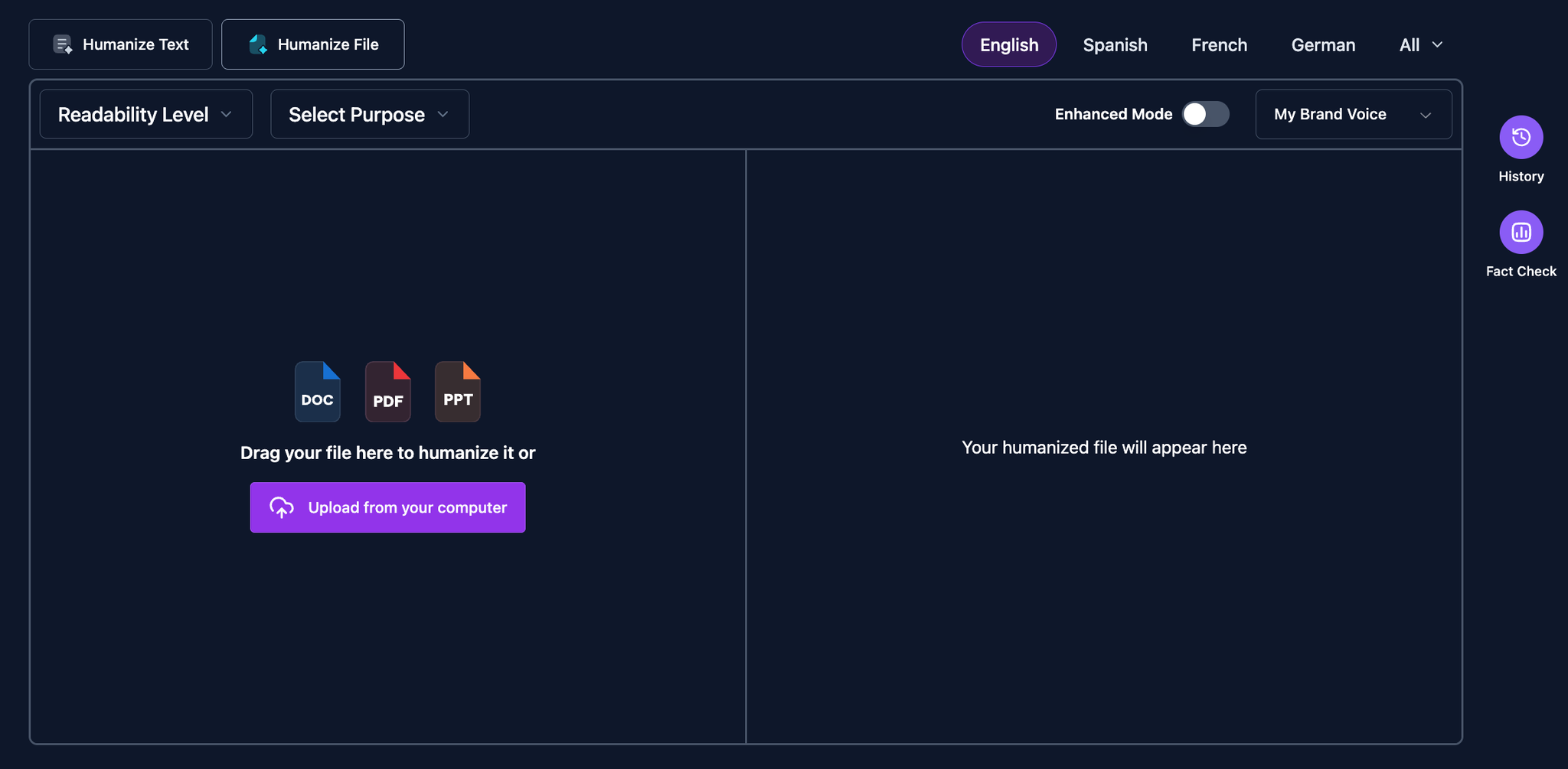
Full-Document Upload and Editing
Pricing for Teachers
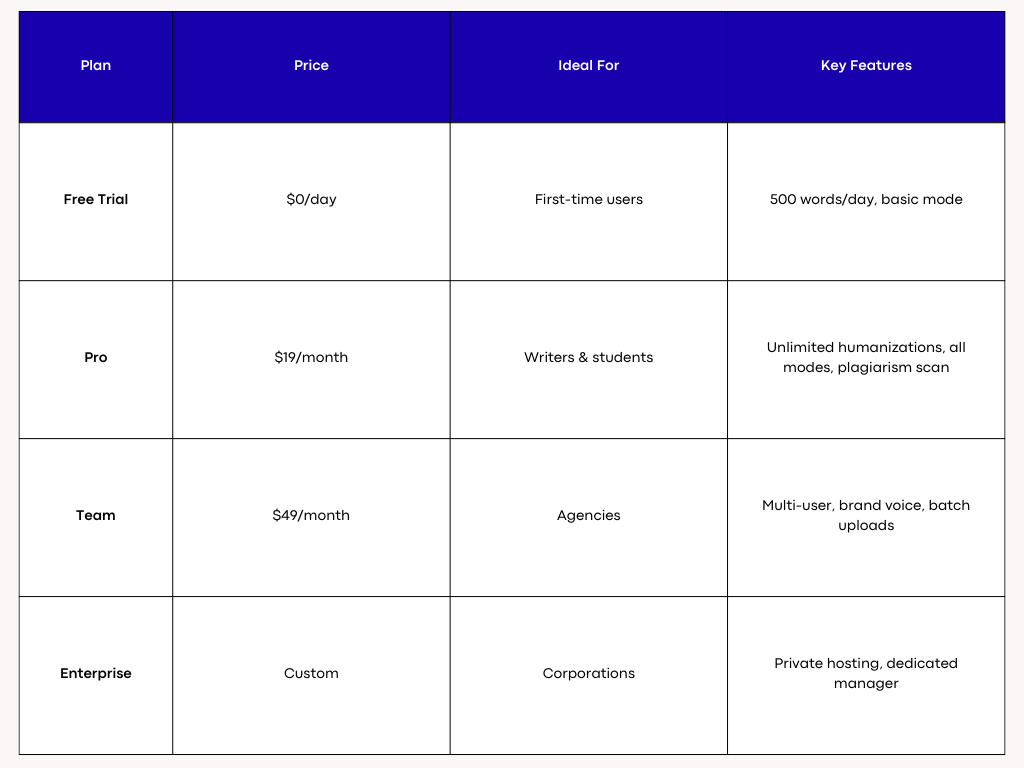
Humanize AI Text Pricing
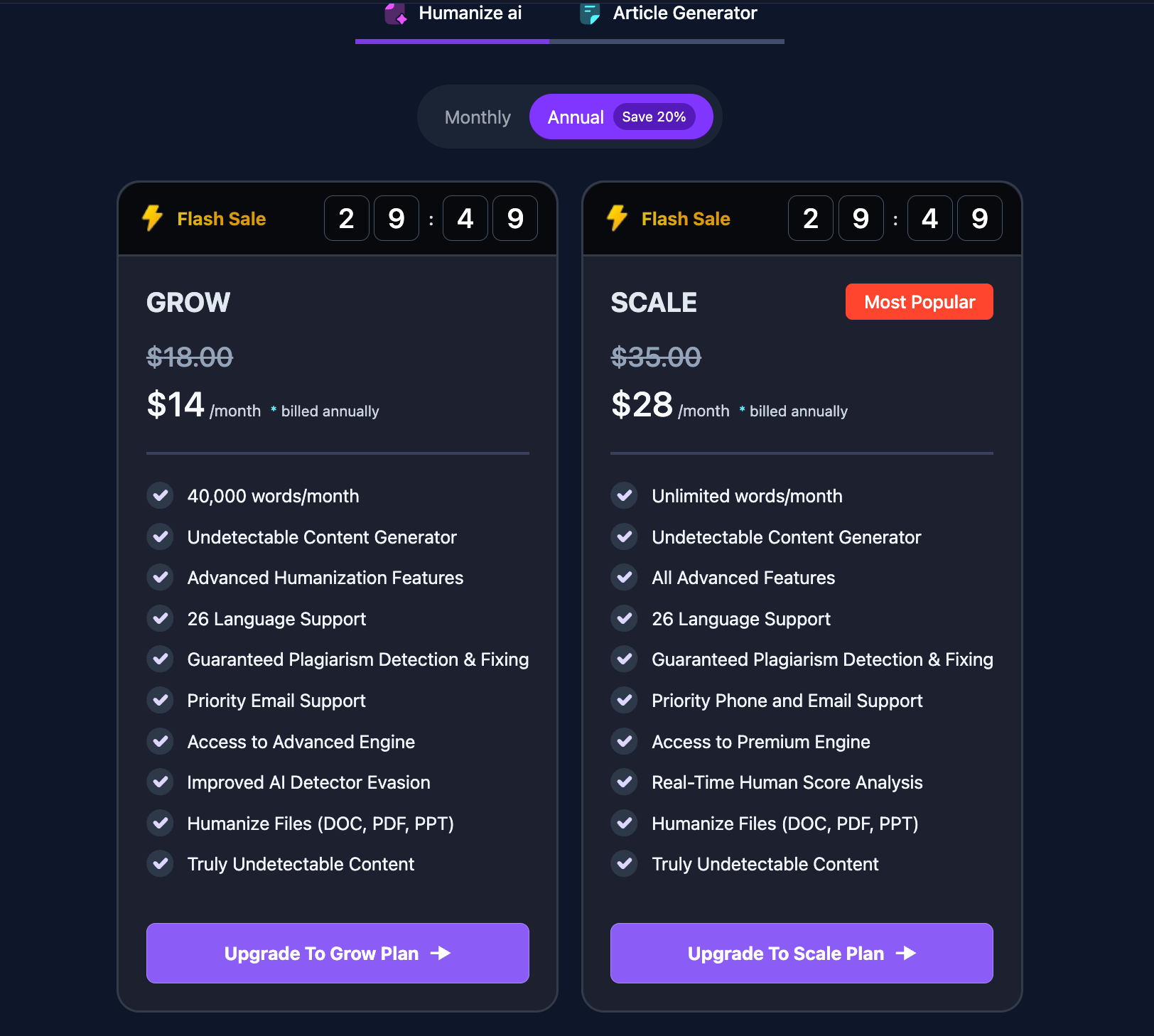
Humanize AI Text Pricing
3. Originality.ai — Best for School-Wide Grading at Scale
Originality.ai is the strongest enterprise-level detector for colleges, online programs, tutoring academies, editorial teams, and instructors managing bulk submissions.
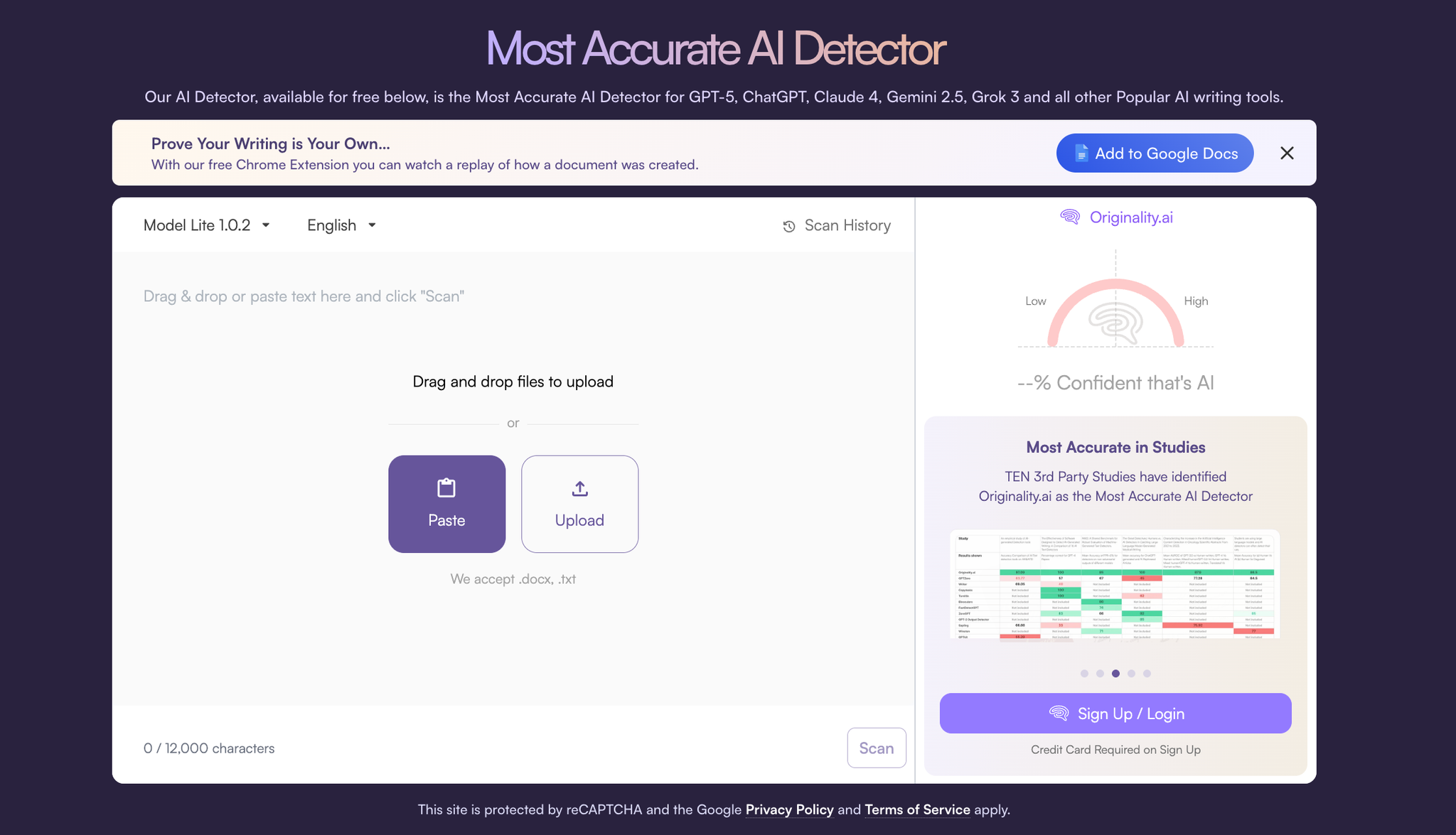
originality.ai
Key Features
Batch Scanning
Teachers upload dozens of essays for automatic batch evaluation. Reports generate quickly and highlight risk levels per student.
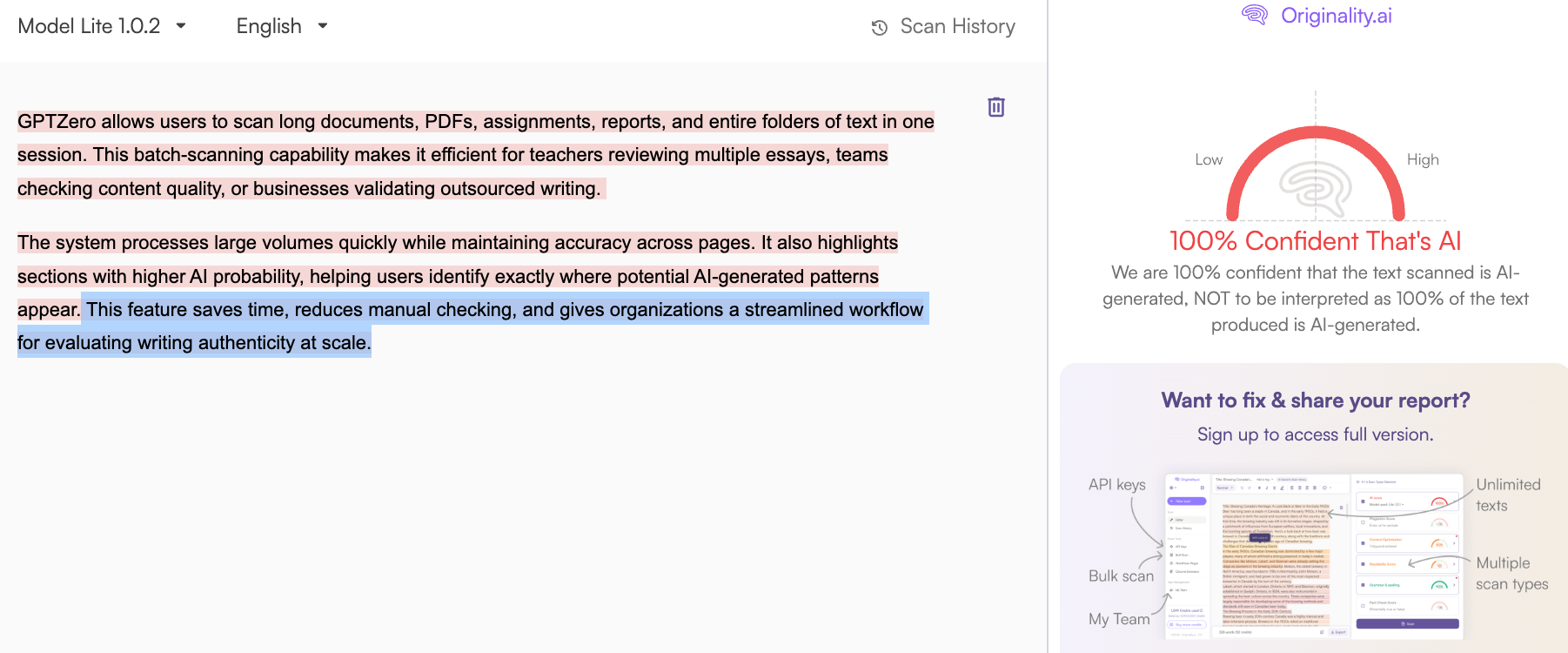
Batch Scanning
AI + Plagiarism Reporting
Originality.ai provides unified detection and plagiarism evaluation—essential for academic grading and school policy enforcement.
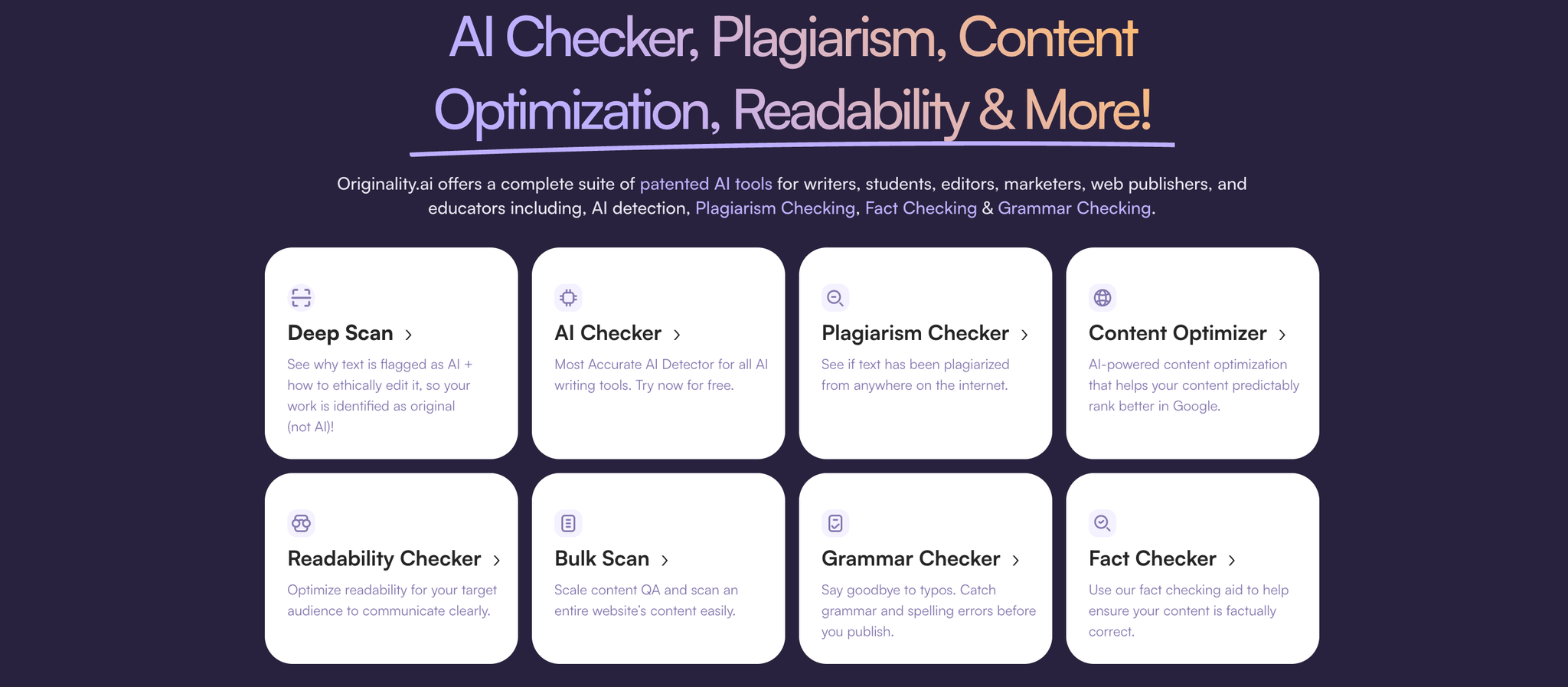
AI + Plagiarism Reporting
Enterprise Control
Schools or instructional departments can set academic integrity thresholds, automate review policies, and manage repeat submissions across semesters.
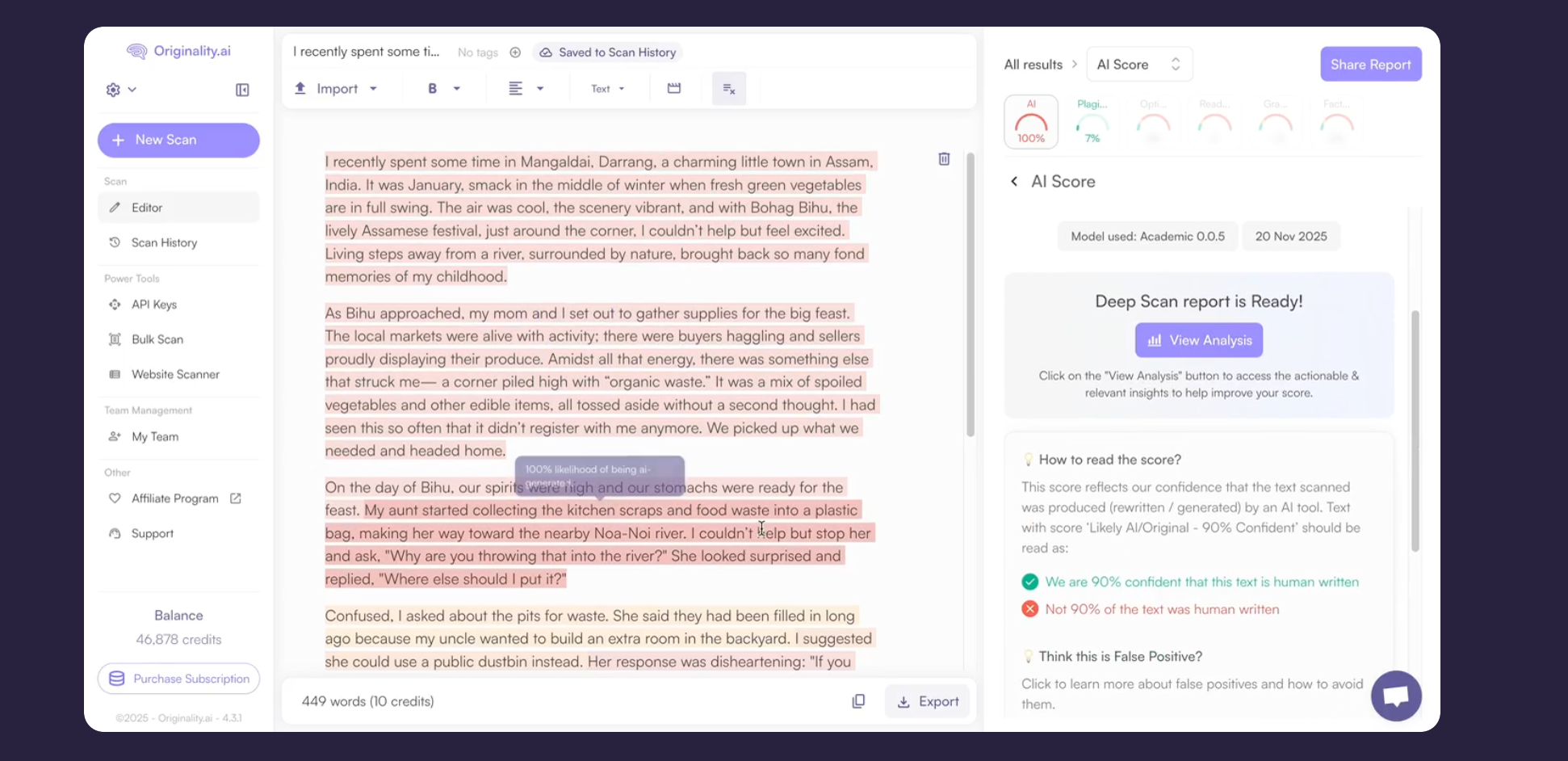
Enterprise-Level Editorial Control
Pricing
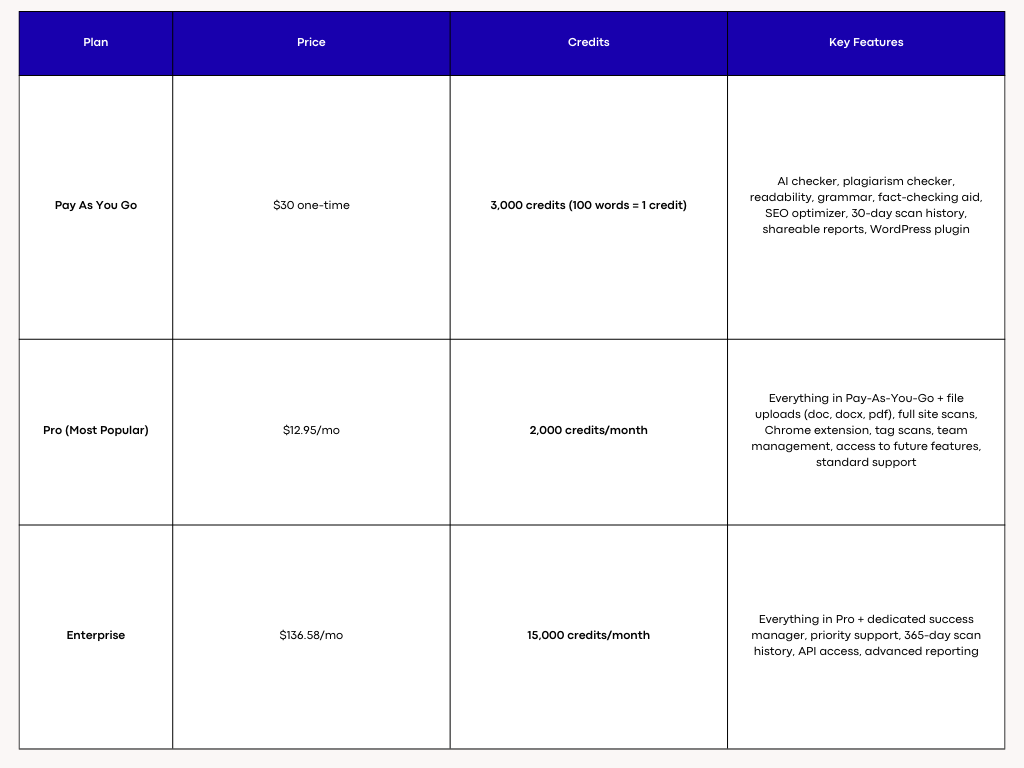
originality.ai — Pricing
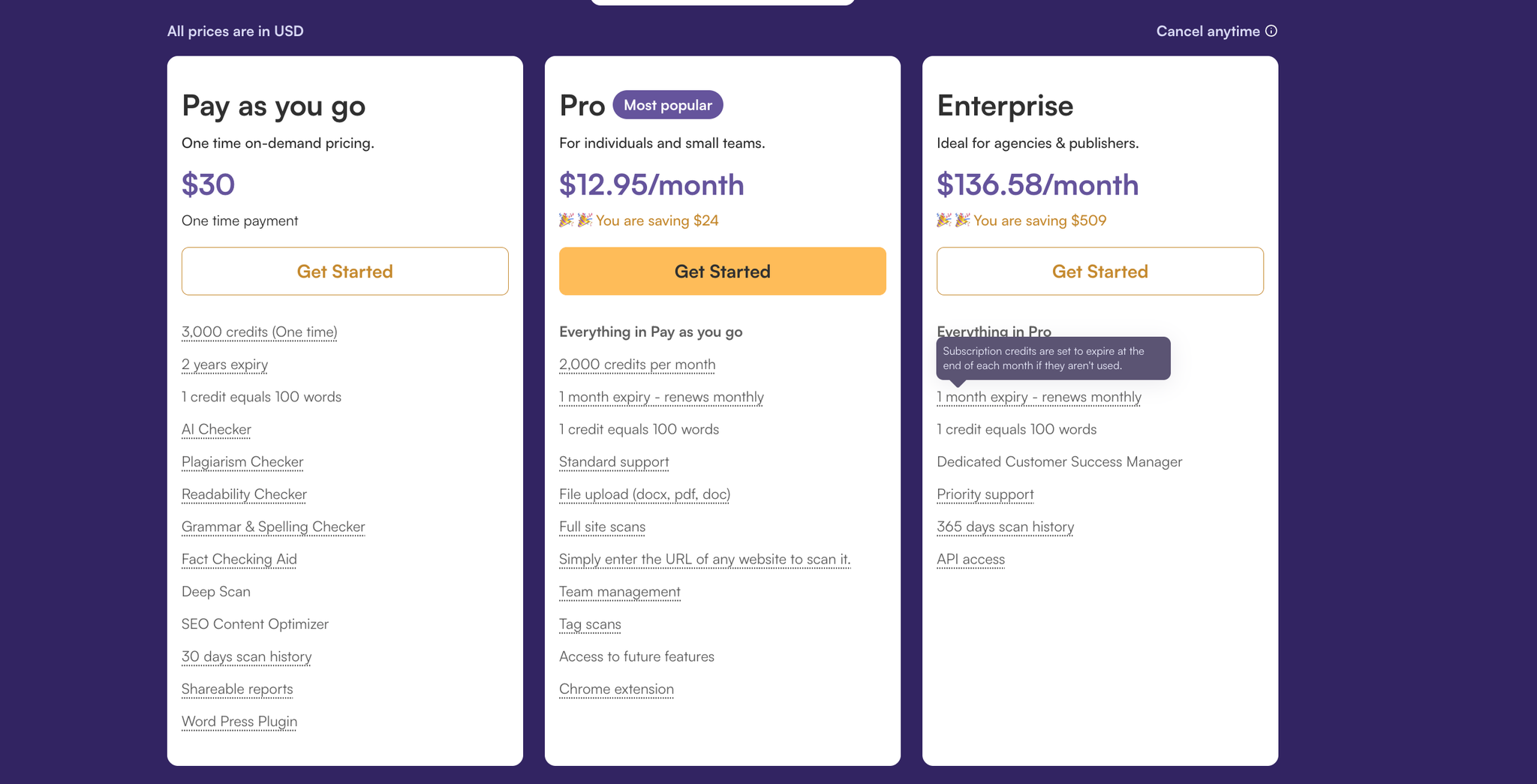
originality.ai — Pricing
4. GPTZero — Best for Classroom Reasoning and Fairness
GPTZero is a leading AI content detection tool that helps educators check whether student writing was generated by AI models like ChatGPT, GPT-4, or Gemini. It highlights AI-written sections, supports multiple languages, and provides detailed reports to uphold academic integrity without over-punishing students.
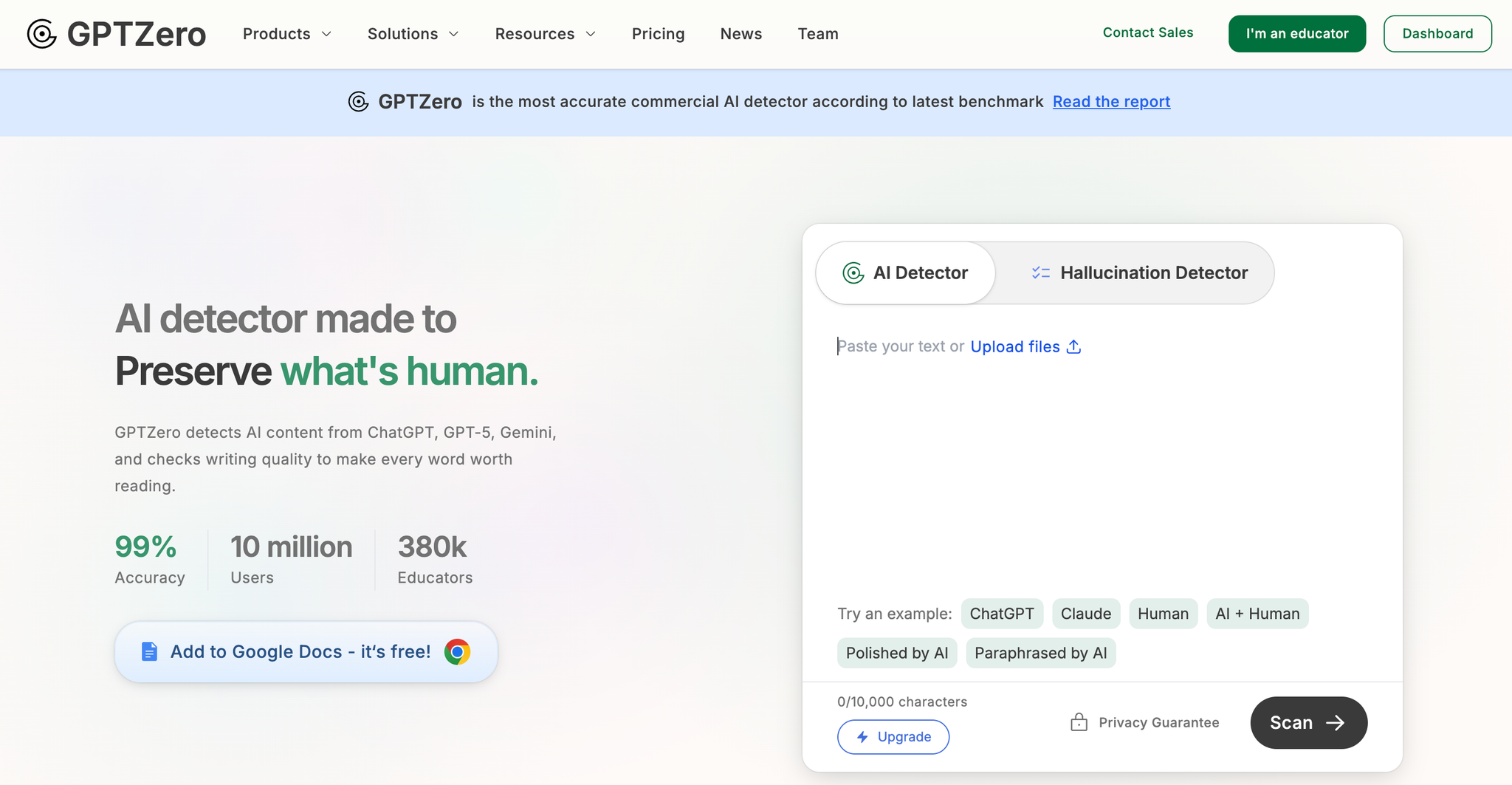
GPTZero
Key Features
AI Detection Accuracy
Uses advanced models to flag AI-generated text with up to ~99% accuracy, lowering false positives and giving teachers confidence when reviewing essays.
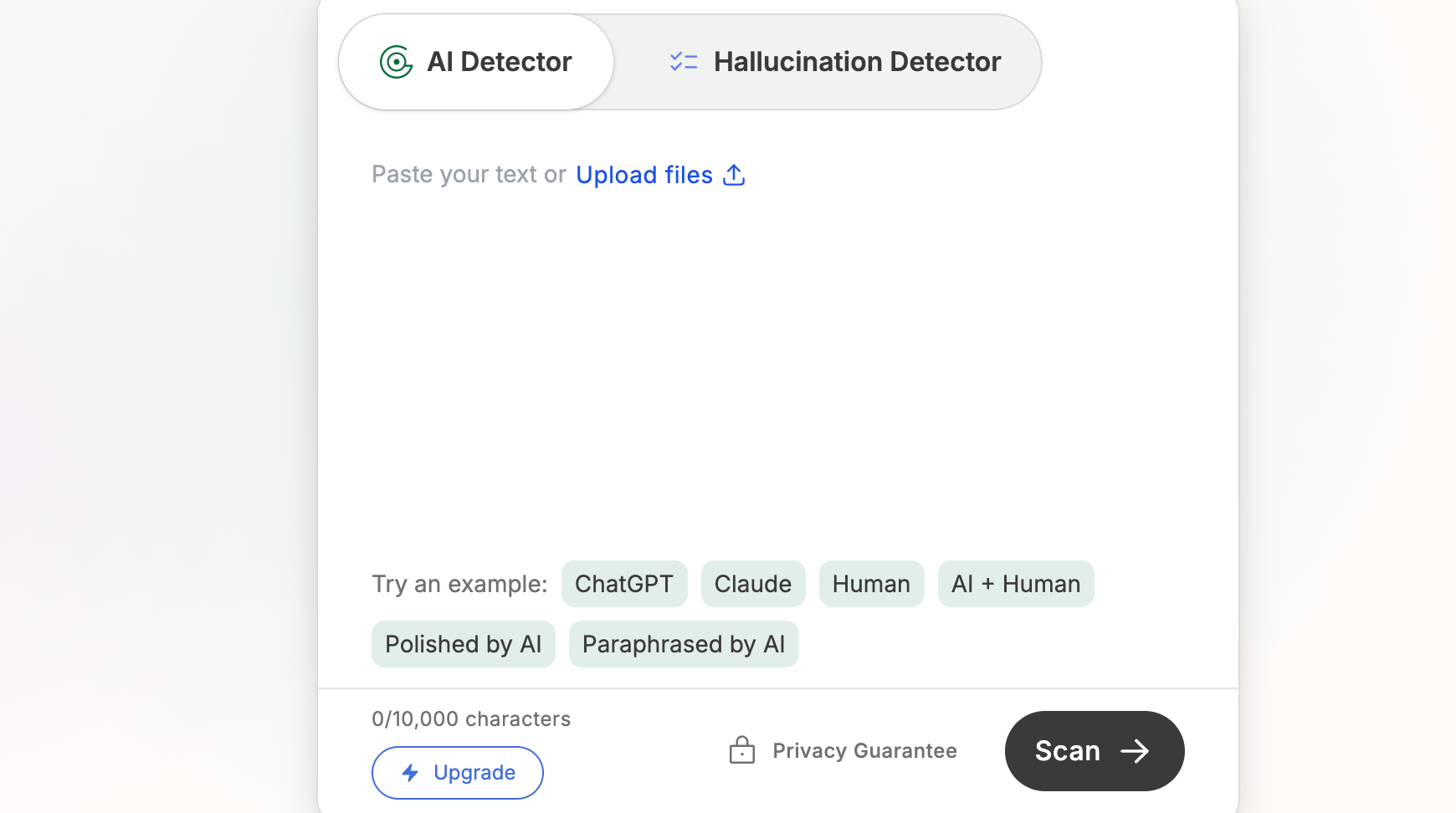
AI Detection Accuracy
Sentence-Level Highlighting
Breaks down documents and highlights specific sentences likely written by AI, helping teachers pinpoint exactly where AI assistance might appear.
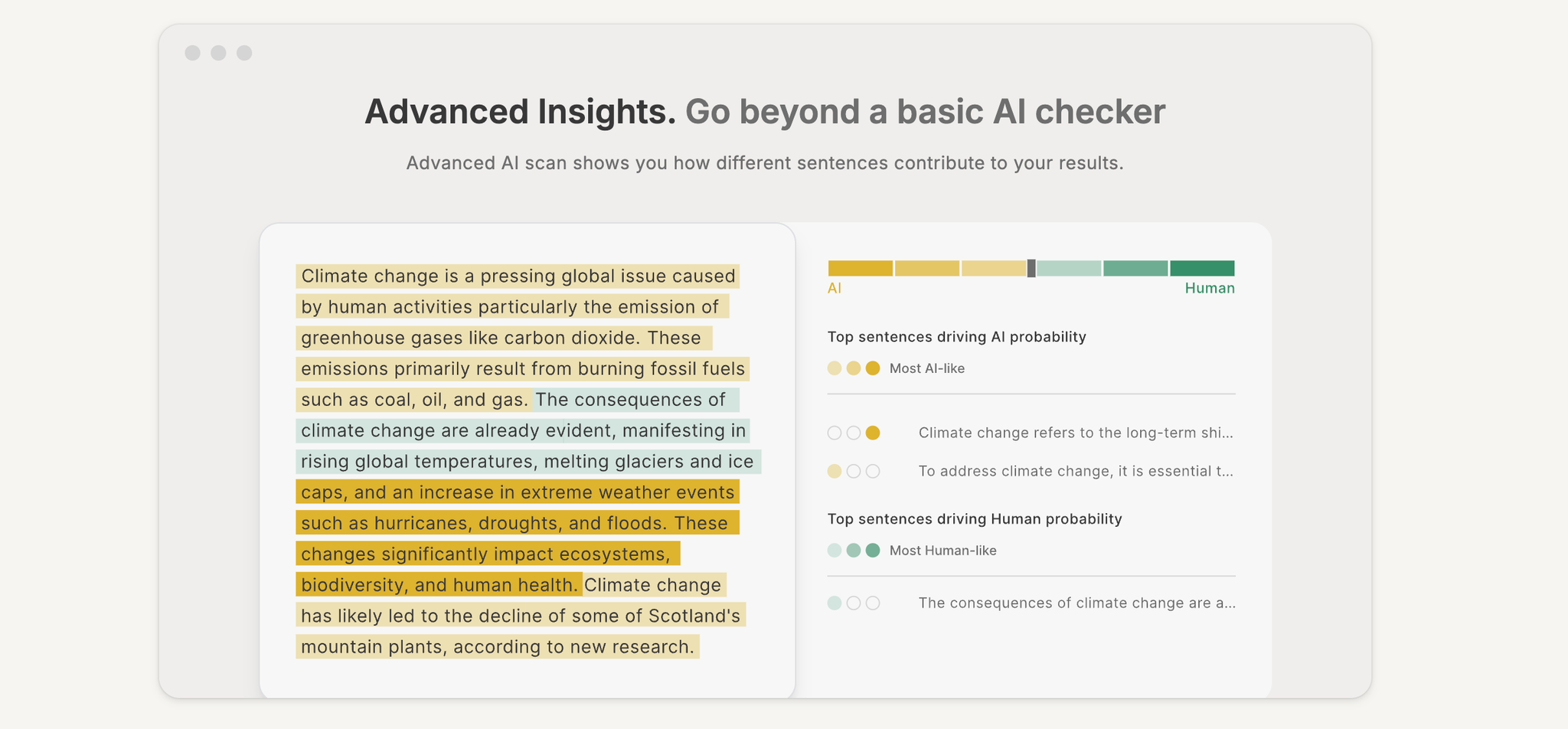
Sentence-Level Detection
Plagiarism Check
Integrated plagiarism detection scans student writing for unattributed content alongside AI signals, saving time on integrity checks.
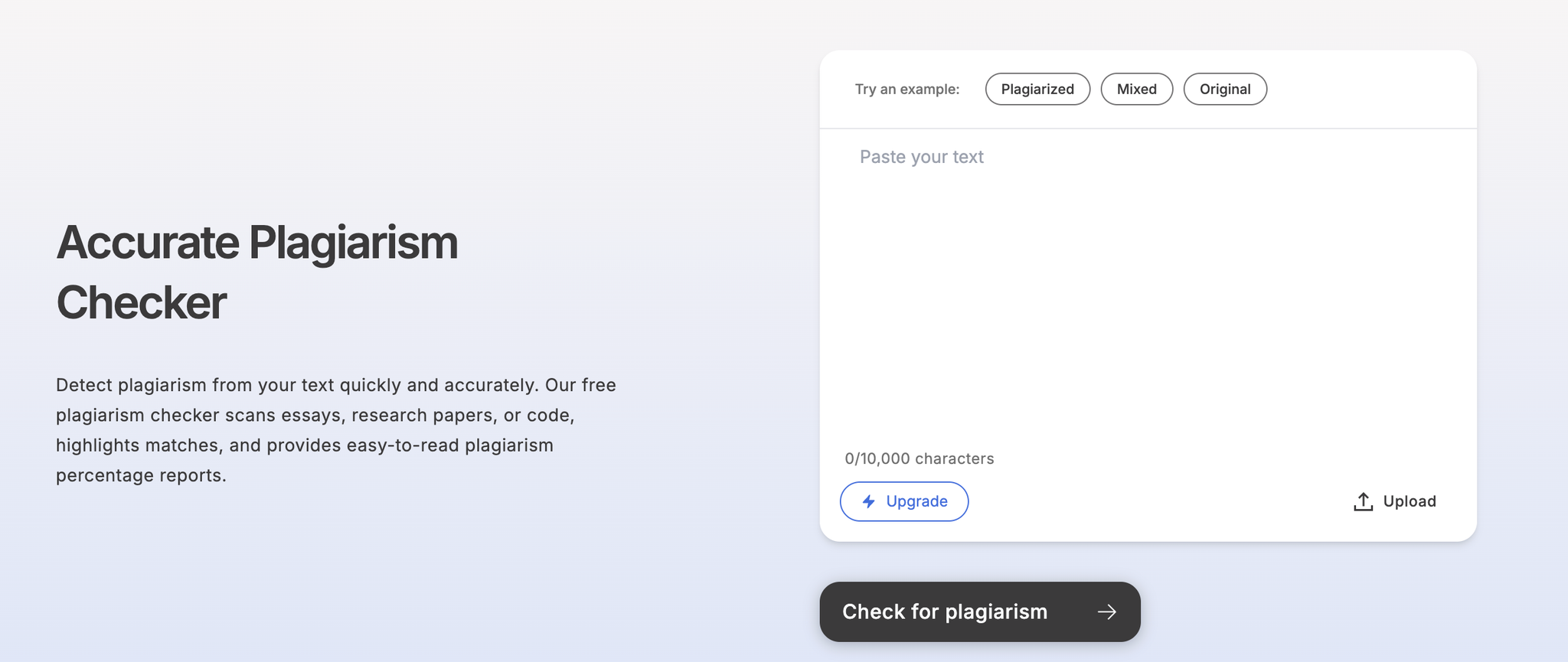
Accurate Plagiarism Checker
Pricing
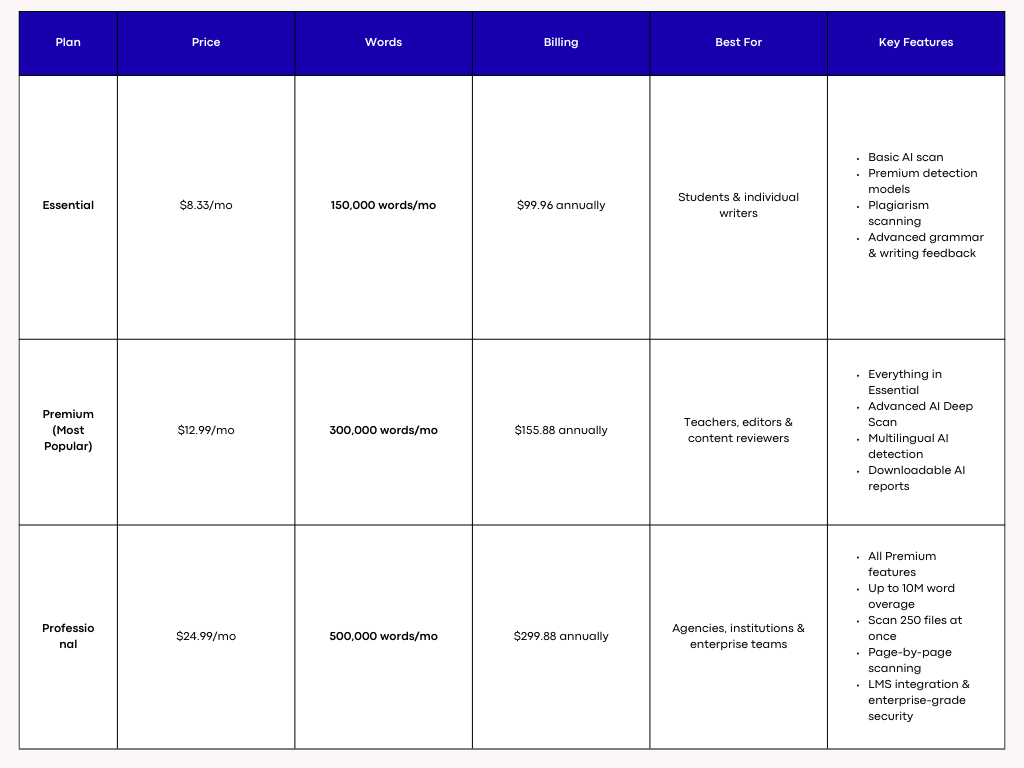
GPTZero — Pricing
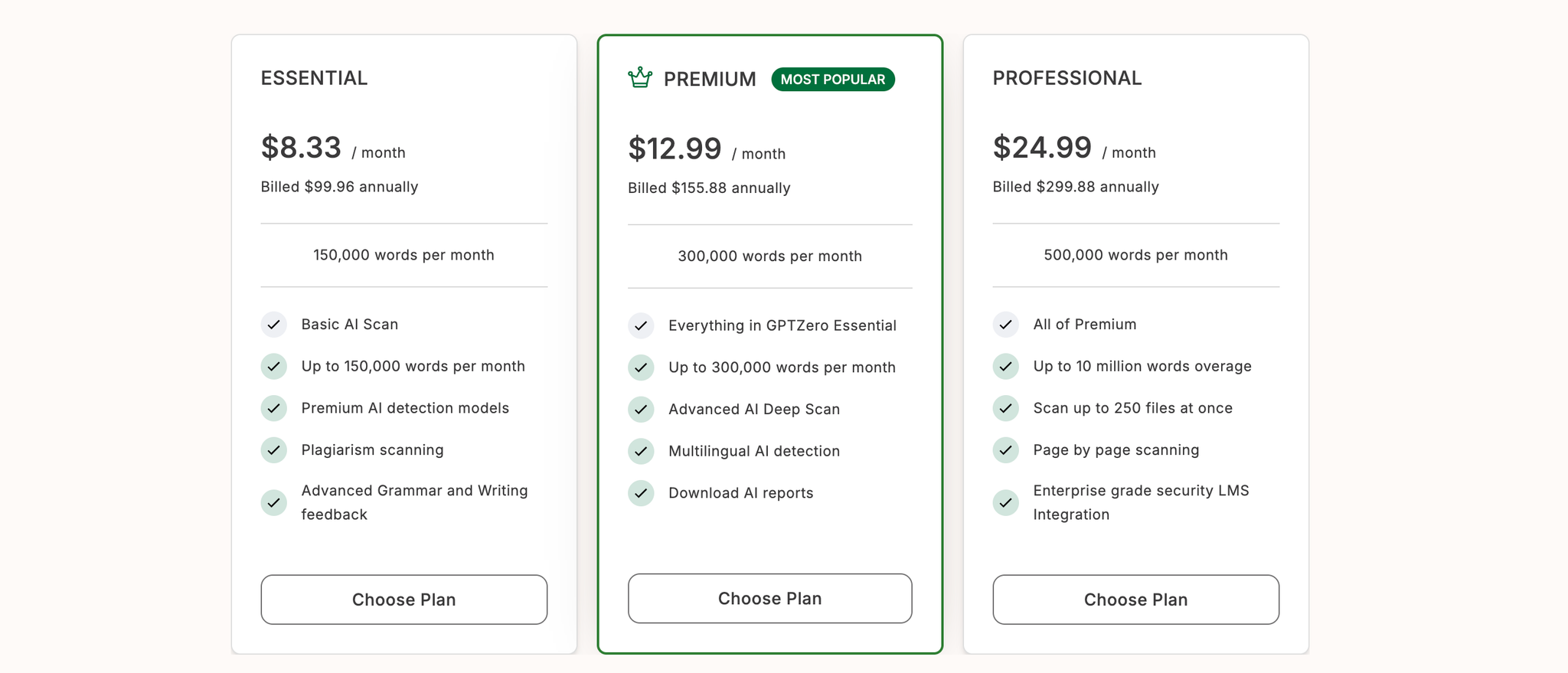
GPTZero — Pricing
5. Copyleaks — Best for Universities, Government, and Educational Platforms
Copyleaks is an enterprise-grade AI detection and plagiarism platform built for large institutions that need high accuracy, transparency, and policy-safe academic integrity enforcement.
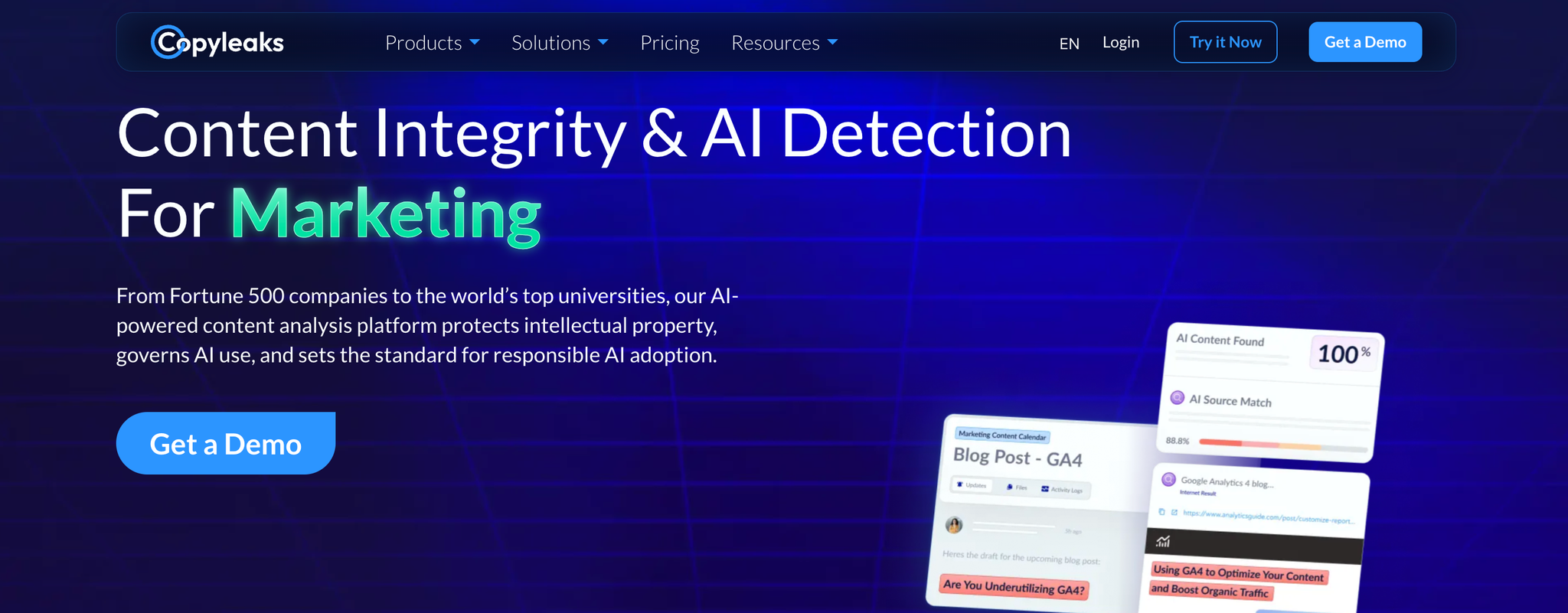
Copyleaks
Key Features
AI Content Detection
Detects AI-generated text across GPT-4, Gemini, Claude, and others using enterprise models designed to minimize false positives in academic submissions.
AI Detector Browser Extension
Advanced Plagiarism Detection
Scans billions of sources, academic databases, and private repositories to identify copied, paraphrased, or improperly cited content.
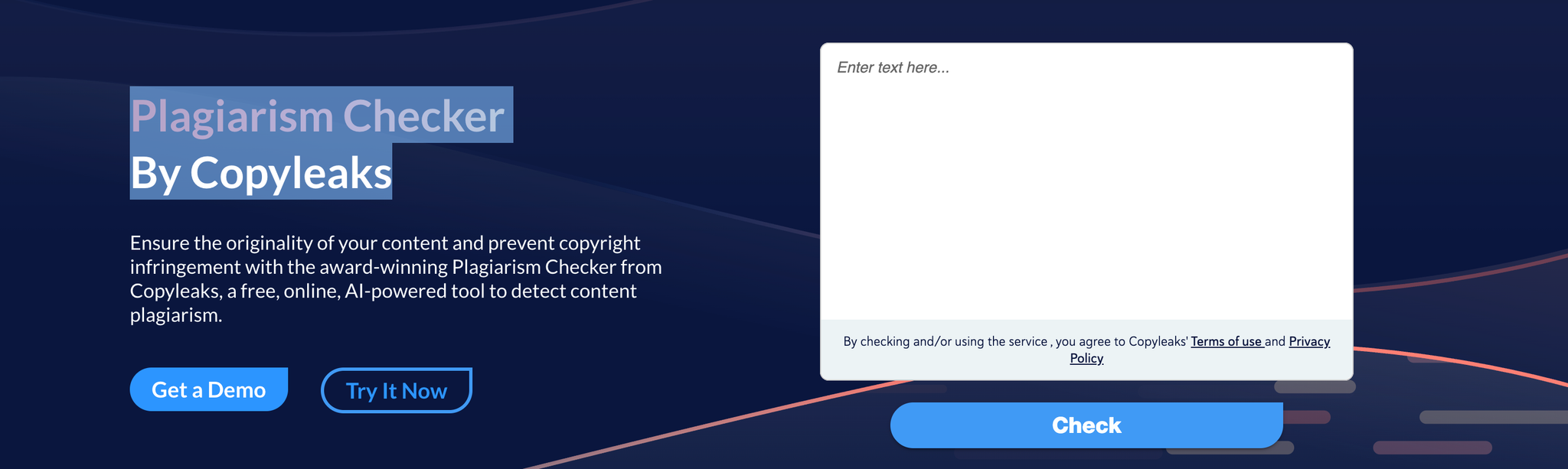
Plagiarism Checker By Copyleaks
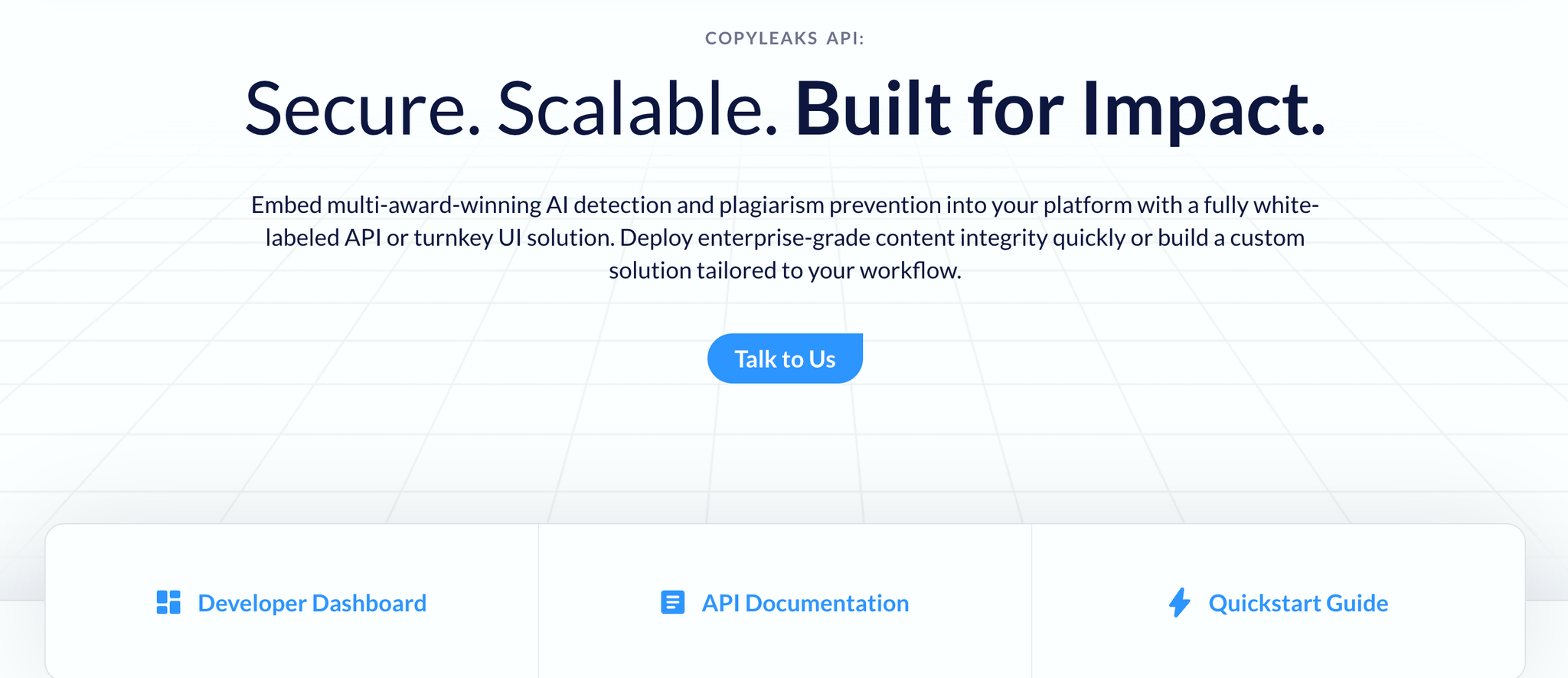
LMS & API Integrations
Integrates with LMS platforms like Moodle and Canvas, plus robust APIs for government systems and large educational platforms.
LMS & API Integrations
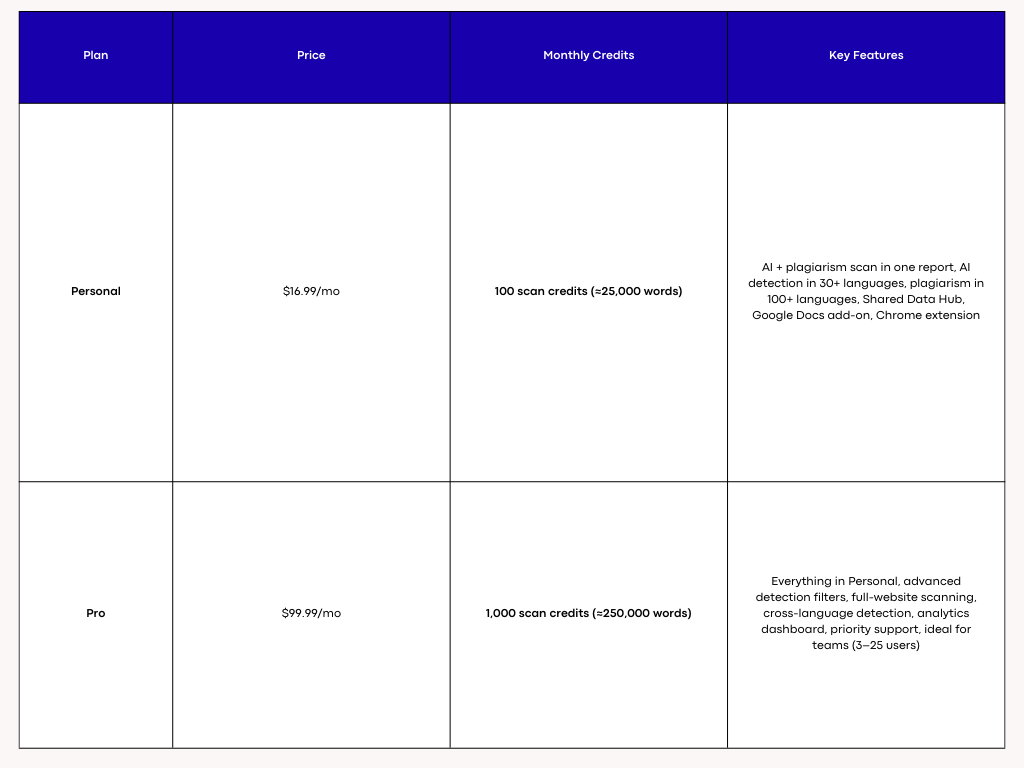
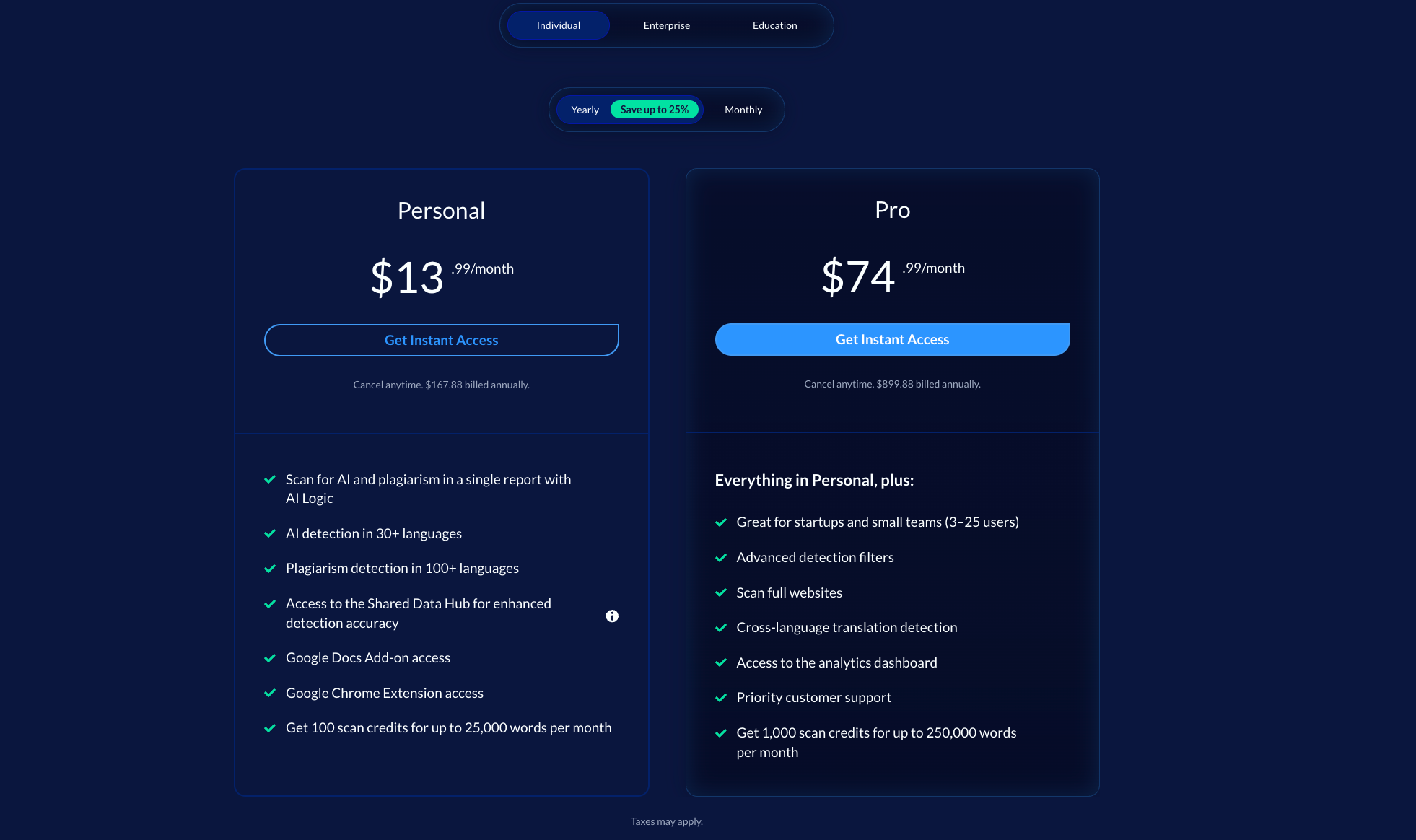
Pricing Plans
Copyleaks — Pricing
Copyleaks — Pricing
Conclusion
Selecting the best AI detector for teachers in 2026 is not about catching students. It is about protecting learning quality, fairness, and trust. Classrooms now sit in a hybrid space where human writing and AI assistance often overlap. Teachers need tools that understand this reality.
The strongest detectors do more than flag content. They explain risk, highlight patterns, and support revision. This approach reduces false accusations and helps students improve their writing skills. It also saves instructors time during grading and review cycles.
For quick checks, lighter tools may work. For coursework, research papers, and large classes, advanced platforms offer better accuracy and control. Features like document uploads, plagiarism checks, and tone remediation matter more than raw detection scores.
Ultimately, the best AI detector for teachers supports academic integrity without fear. It strengthens instruction, encourages honest learning, and keeps assessment fair in an AI-powered education system.
Frequently Asked Questions: Best AI Detector for Teachers
What is an AI detector, and why do teachers need one?
An AI detector is a tool that analyzes written content to estimate whether parts of it were generated or heavily assisted by artificial intelligence. In 2026, teachers face a new academic landscape where AI tools are widely accessible and commonly used by students for brainstorming, drafting, and editing.
This does not mean all AI use is dishonest. However, it does mean educators need reliable ways to assess authorship, originality, and writing authenticity. AI detectors help teachers identify patterns that may indicate machine-generated structure, predictable phrasing, or unnatural sentence flow.
Used correctly, an AI detector supports academic integrity while allowing ethical AI use under clear classroom guidelines.
Can AI detectors accurately tell if a student used AI?
AI detectors do not provide absolute certainty. Instead, they provide probability-based analysis. The most reliable tools evaluate multiple signals, including sentence predictability, repetition patterns, transition symmetry, and linguistic entropy.
High-quality detectors reduce false positives by analyzing academic writing styles rather than conversational language alone. They also show which sentences appear risky, rather than labeling entire documents unfairly.
Teachers should treat AI detection results as evidence for review—not as final proof of misconduct.
Why do some AI detectors falsely flag human-written academic essays?
Academic writing naturally includes formal tone, structured arguments, topic sentences, and consistent transitions. Many free or low-quality AI detectors are trained on conversational data and creative writing rather than scholarly text.
As a result, they misinterpret structured academic writing as algorithmic. This leads to false positives, especially in research summaries, policy essays, lab reports, and literature reviews.
Paid classroom-ready tools are typically trained on larger academic datasets, which improves fairness and reduces misclassification.
Are free AI detectors safe to use for grading?
Free AI detectors can be useful for quick checks or informal screening. However, they should not be used as the sole basis for grading decisions or disciplinary action.
Limitations include smaller datasets, lack of document-level analysis, no plagiarism integration, and vague risk explanations. These tools often return a single percentage without showing why the score exists.
Teachers using free tools should combine results with writing history, assignment context, and direct student discussion.
What features should teachers look for in the best AI detector?
The best AI detector for teachers includes:
- Sentence-level highlighting instead of document-wide judgment
- Clear explanations for why text appears risky
- Support for academic tone and structure
- Full document uploads (PDF, DOCX)
- Optional plagiarism detection
- Revision or remediation support
Tools that combine detection with educational feedback help maintain trust while protecting integrity.
How is AI detection different from plagiarism detection?
Plagiarism detection checks whether content matches existing published sources. AI detection analyzes how the text was written, not where it came from.
A student can submit fully original text that is still AI-generated. Conversely, a student may plagiarize human-written content without using AI at all.
The strongest classroom tools combine both systems into one report, allowing teachers to assess originality and authorship together.
Can students ethically use AI and still pass AI detection?
Yes, depending on classroom policy. Many educators allow AI for brainstorming, outlining, grammar cleanup, or idea generation.
Problems arise when students submit AI-generated drafts as final work without meaningful personal input. AI detectors help identify when writing lacks personal voice, critical thinking, or human variability.
When policies are clear, AI detection becomes a teaching aid rather than a punishment tool.
Should teachers tell students they use AI detectors?
Transparency is strongly recommended. Informing students that AI detection is part of the review process encourages responsible use and reduces fear.
When students understand that detectors look for structure and tone—not just “AI words”—they are more likely to write authentically and revise thoughtfully.
Clear communication builds trust and prevents unnecessary conflict.
What should a teacher do if an essay is flagged as high risk?
A high-risk score should trigger review, not immediate accusation. Teachers should:
- Review highlighted sections carefully
- Compare with the student’s past writing
- Ask the student to explain their process
- Offer revision if appropriate
Many institutions treat AI detection as a conversation starter, not a disciplinary verdict.
Can AI detectors help students improve writing?
Yes. The most advanced tools act as revision assistants. They explain which sentences feel mechanical, repetitive, or overly predictable.
Students can revise flagged sections to improve clarity, flow, and originality. This supports learning outcomes and writing development.
Tools that support revision are especially useful in tutoring, ESL education, and online coursework.
Do AI detectors work for non-English or ESL writing?
Some tools support multiple languages, but accuracy varies. ESL writing often triggers false positives because sentence patterns may appear simplified or repetitive.
Teachers working with ESL students should use detectors cautiously and prioritize tools that explain risk at the sentence level.
Human review remains essential for fairness in multilingual classrooms.
Are AI detectors allowed under educational privacy laws?
Most reputable tools comply with standard data protection practices. However, teachers should verify whether student content is stored, logged, or reused for training.
Browser-based tools and education-focused platforms often provide privacy assurances suitable for classroom use.
Institutions should review compliance with local regulations such as FERPA, GDPR, or regional equivalents.
Can AI detectors handle long documents like theses or dissertations?
Free tools usually cannot. They often limit word count or require text to be broken into chunks, which disrupts analysis.
Paid academic tools support full-document uploads and preserve structural context. This improves detection accuracy and saves time for instructors.
For graduate-level education, full-document support is essential.
How do batch scanning features help teachers?
Batch scanning allows instructors to upload multiple assignments at once and receive individual reports automatically.
This is especially useful for large classes, online programs, and institutions with heavy grading loads.
Batch review improves efficiency without sacrificing fairness or depth of analysis.
Can AI detectors replace human judgment?
No. AI detectors are decision-support tools, not decision-makers.
They help surface patterns and risks that deserve attention. Final judgment should always involve instructor expertise, assignment context, and student communication.
Used properly, AI detectors enhance teaching rather than replace it.
Are AI detectors reliable for online learning platforms?
Yes, especially enterprise-grade tools with LMS integrations. These platforms support automated checks, reporting, and academic integrity policies across courses.
Online programs benefit greatly from consistent, scalable review tools.
However, human oversight remains essential.
How should schools create AI policies around detection?
Effective AI policies define:
- Acceptable vs unacceptable AI use
- When detection is applied
- How results are reviewed
- Student rights to explanation and revision
Policies should emphasize learning, transparency, and fairness.
What is the biggest mistake teachers make with AI detectors?
The biggest mistake is treating detection scores as absolute proof.
AI detection works best as part of a broader academic integrity framework that includes education, communication, and revision opportunities.
When used punitively without context, detectors undermine trust.
Which AI detector is best for teachers overall?
There is no single “best” tool for every classroom. The right choice depends on class size, subject matter, and instructional goals.
Some tools excel at revision and tone support. Others work best for large-scale grading or institutional enforcement.
The best AI detector for teachers is one that supports fairness, clarity, and learning—not fear.
About the Author

Dilyar Buzan is the founder and CEO of AISEO.ai, an AI-native SEO platform. With a background in AI from the University of Amsterdam, Dilyar specializes in Generative Engine Optimization (GEO), Answer Engine Optimization (AEO), and AI-driven content strategy, helping brands earn visibility across ChatGPT, Perplexity, Google AI Overviews, and traditional search. He's also co-founder of Sceneform.ai, an AI content platform for brands and creators.