




Bypass Winston AI Detection — Get 100% Human Score, Every Time
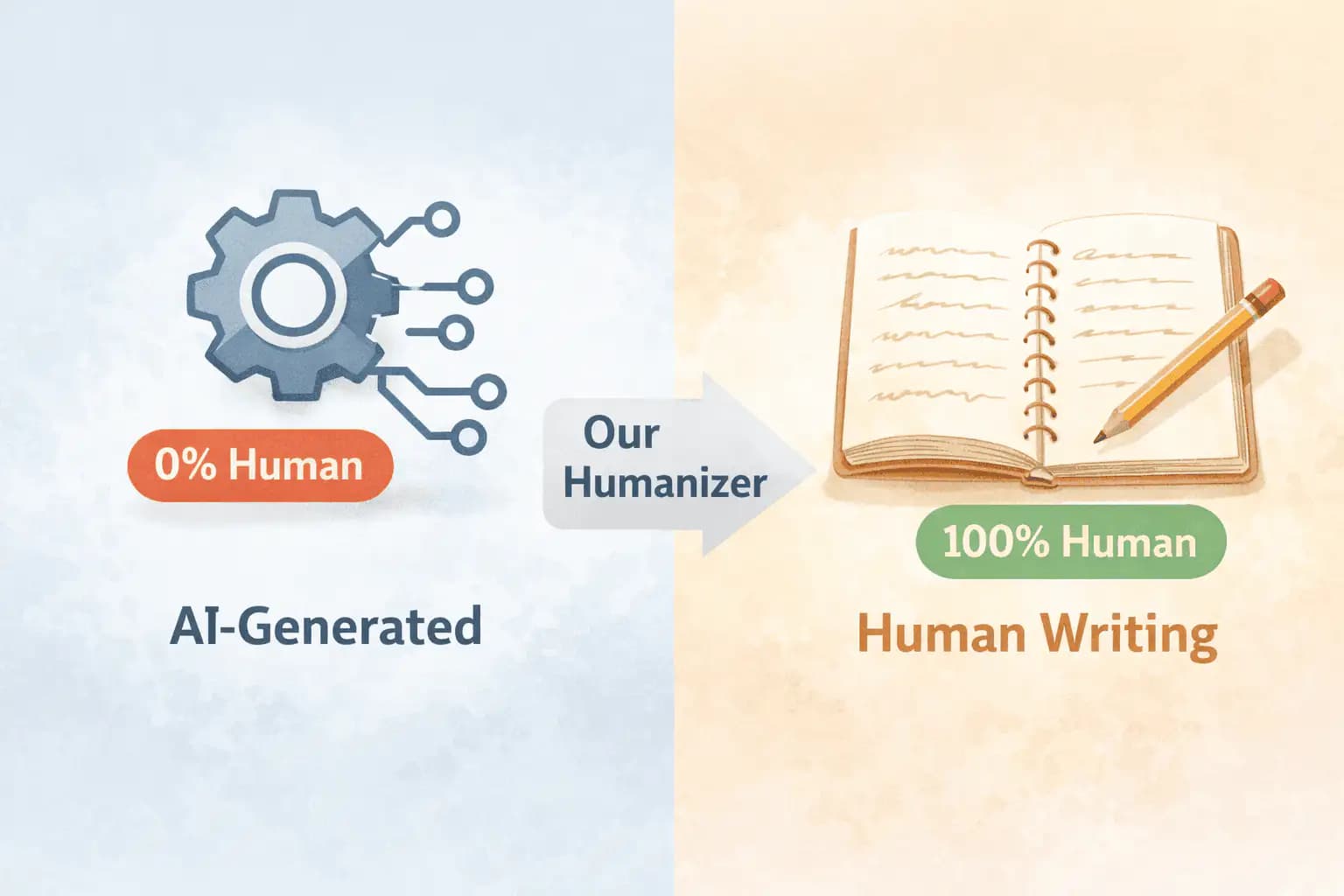
What Is Winston AI?
Winston AI is a content detection platform launched in February 2023. It was designed from the ground up as a dedicated AI detection tool — not a plagiarism checker that added AI detection later. That matters because its entire architecture is built around identifying synthetic writing, and its detection model has been refined every single week since launch.
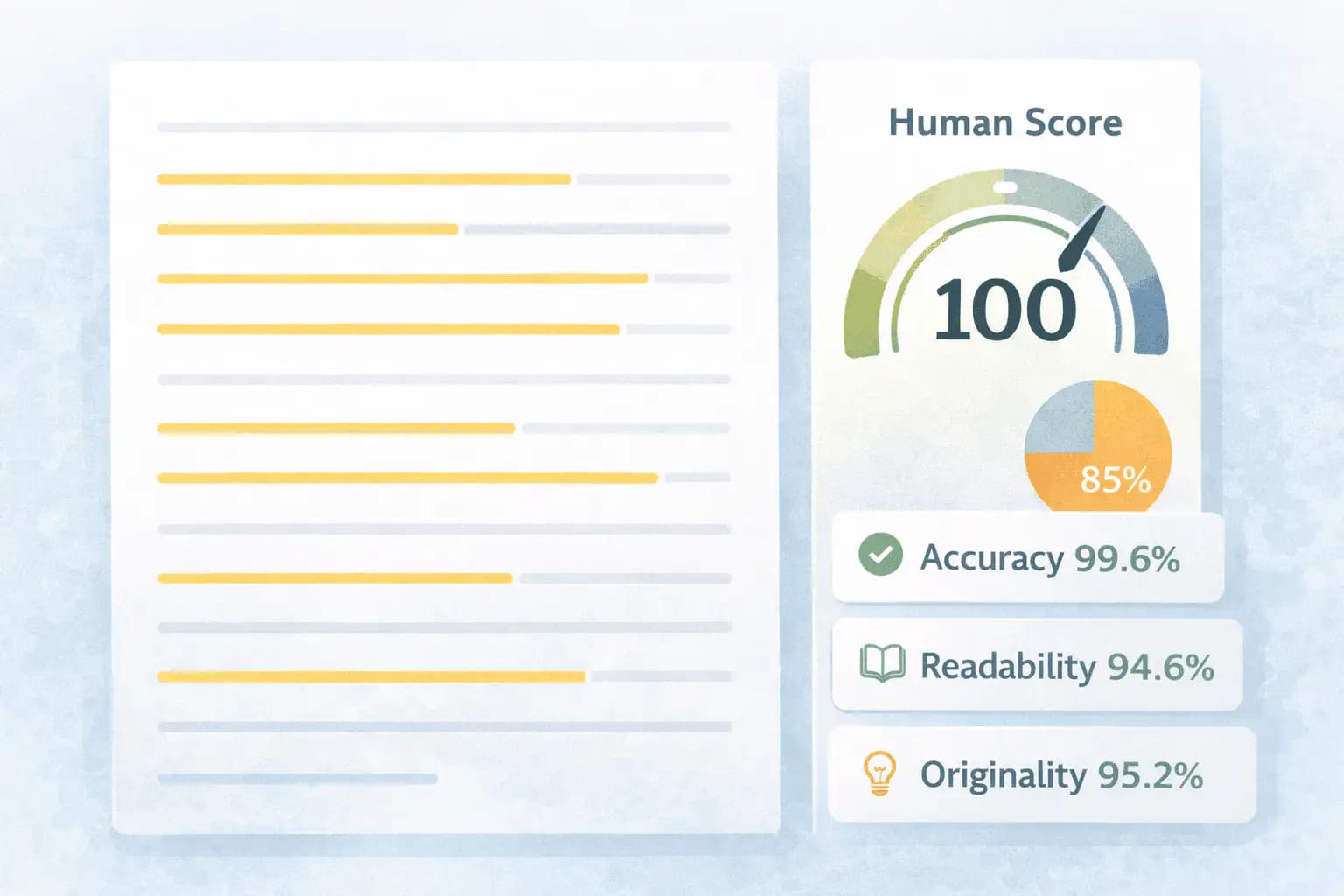
The platform goes far beyond a simple text scan. Winston AI outputs a Human Score — a probability rating from 0 to 100 indicating how likely your content was written by a real person — along with a color-coded Prediction Map that highlights individual sentences flagged as AI-generated. It runs a simultaneous plagiarism check, a readability analysis using the Flesch-Kincaid formula, a fact-checker, and an AI image and deepfake detector. It accepts pasted text, uploaded .docx and .pdf files, direct URL imports, and even handwritten documents through its OCR engine.
Institutions choose Winston AI specifically because of its low false positive rate and its ability to detect AI content that has been paraphrased or lightly edited. Its algorithms are updated weekly — faster than most competitors — and it's been verified across multiple academic studies. It supports detection in 11 languages including English, French, Spanish, Portuguese, German, Dutch, Polish, Italian, Indonesian, Romanian, and Chinese.
How Winston AI Actually Detects AI Text
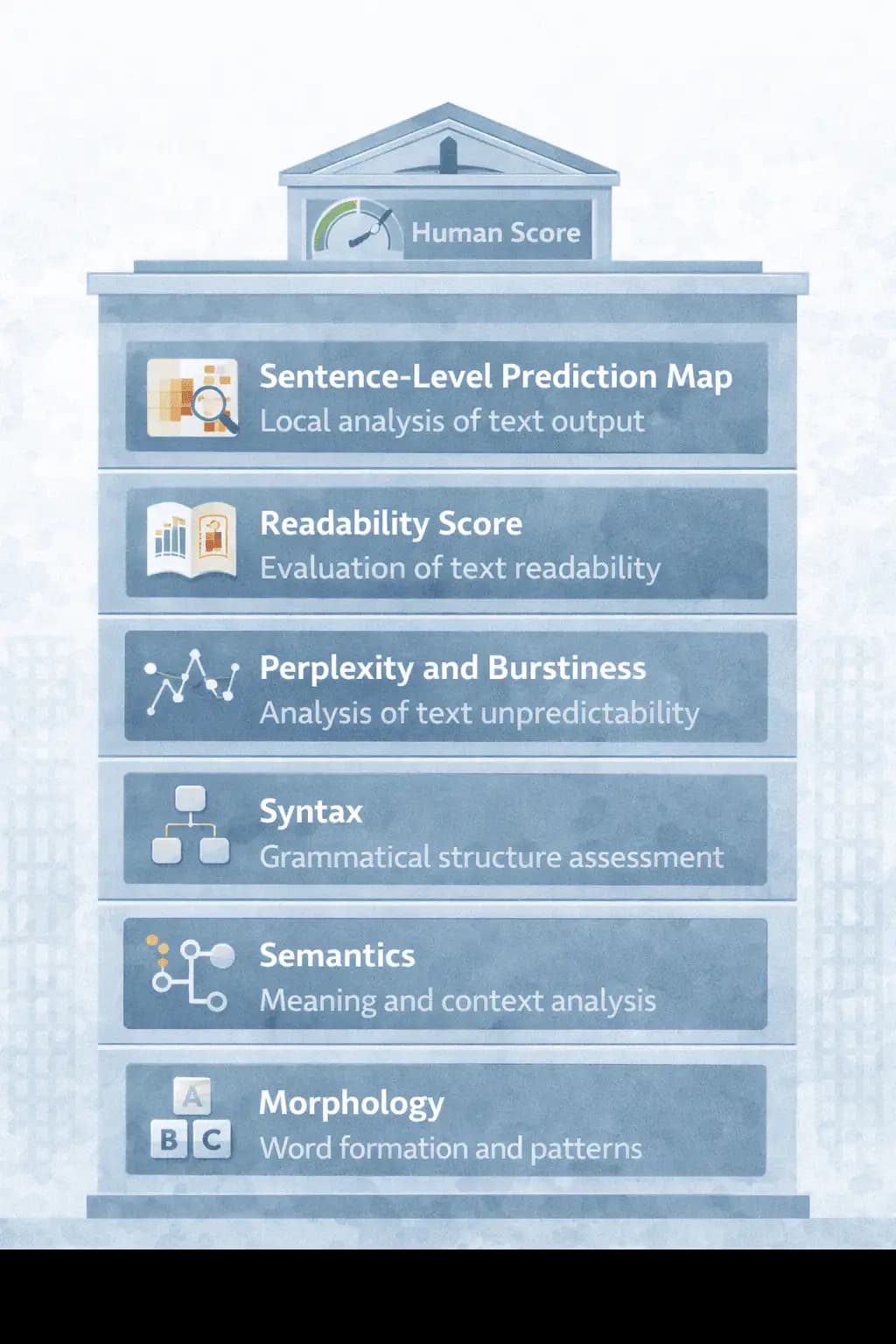
This is the section most people skip — and it's the reason they keep getting flagged. Winston AI doesn't just check whether your text sounds like ChatGPT. It runs a multi-layer linguistic analysis that looks at how language is constructed from the word level all the way up to the document level. Understanding those layers is how you understand what actually needs to change.
Morphology — Word-Level Analysis
Morphology is the study of how individual words are formed and whether they fit their context. Winston AI evaluates each word and asks whether it belongs naturally — contextually grounded, or semantically hollow. AI models sometimes generate syntactically valid words that are the wrong fit for their context: words that pass a spell-check but feel subtly off to a trained model. This layer catches slightly incorrect word choices, misused idioms, and vocabulary that statistically appears far more often in AI-generated content than in natural human writing. Over the course of a full document, those word-level signals accumulate into a pattern Winston's model recognizes.
Semantics — Phrase and Sentence Meaning
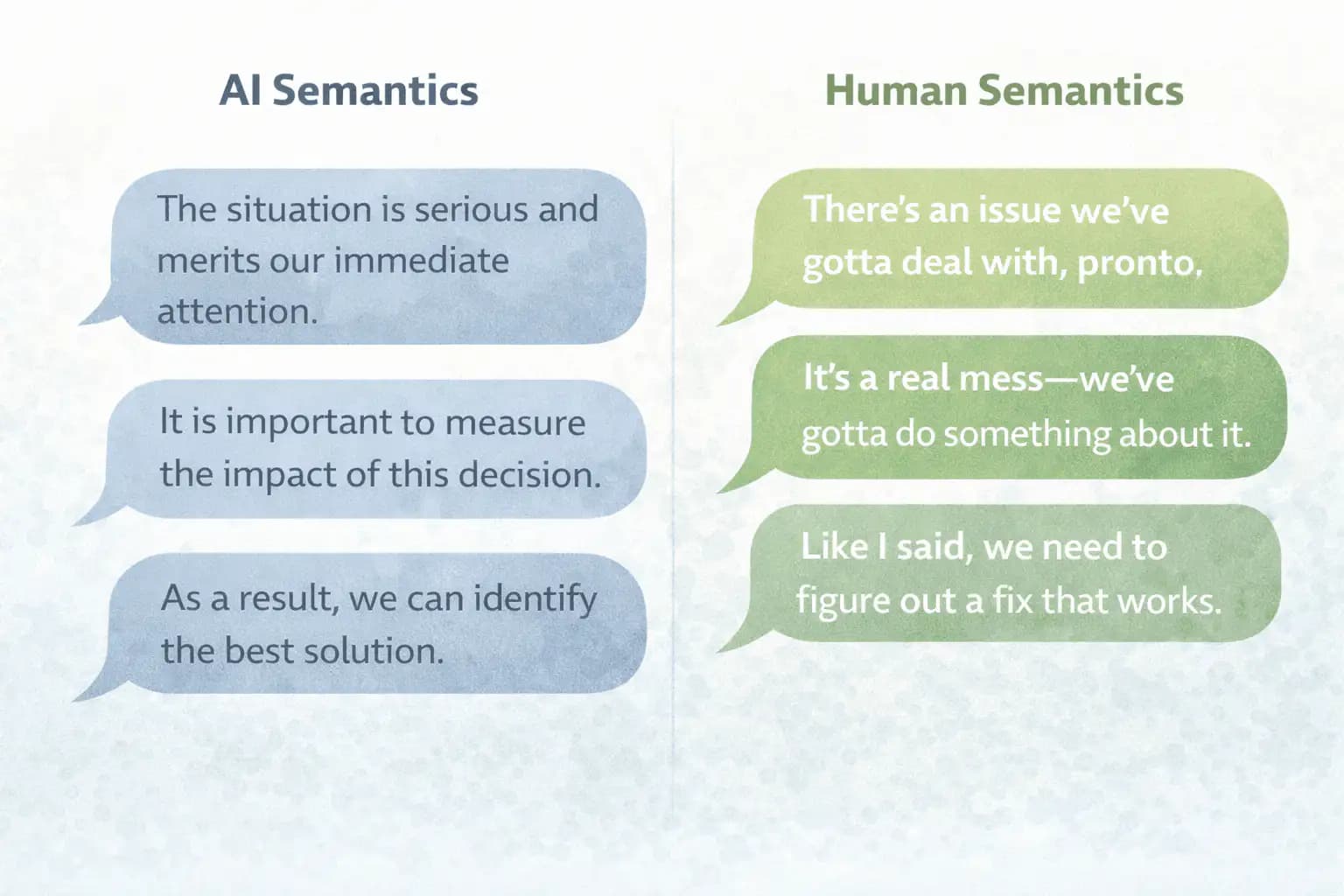
Semantics is about meaning — specifically whether the meaning your sentences convey is contextually appropriate and consistent with surrounding text. Winston AI checks whether phrases are used correctly in context, not just grammatically. AI systems trained to predict the most statistically probable next token tend to produce sentences that are grammatically impeccable but sometimes feel subtly disconnected from the surrounding narrative. Human writing is messier. We use phrases loosely. We assume shared context. We make references backward and forward in the text that create a web of meaning AI rarely replicates naturally. Winston AI is trained to detect the absence of that web.
Syntax — Sentence Structure Patterns
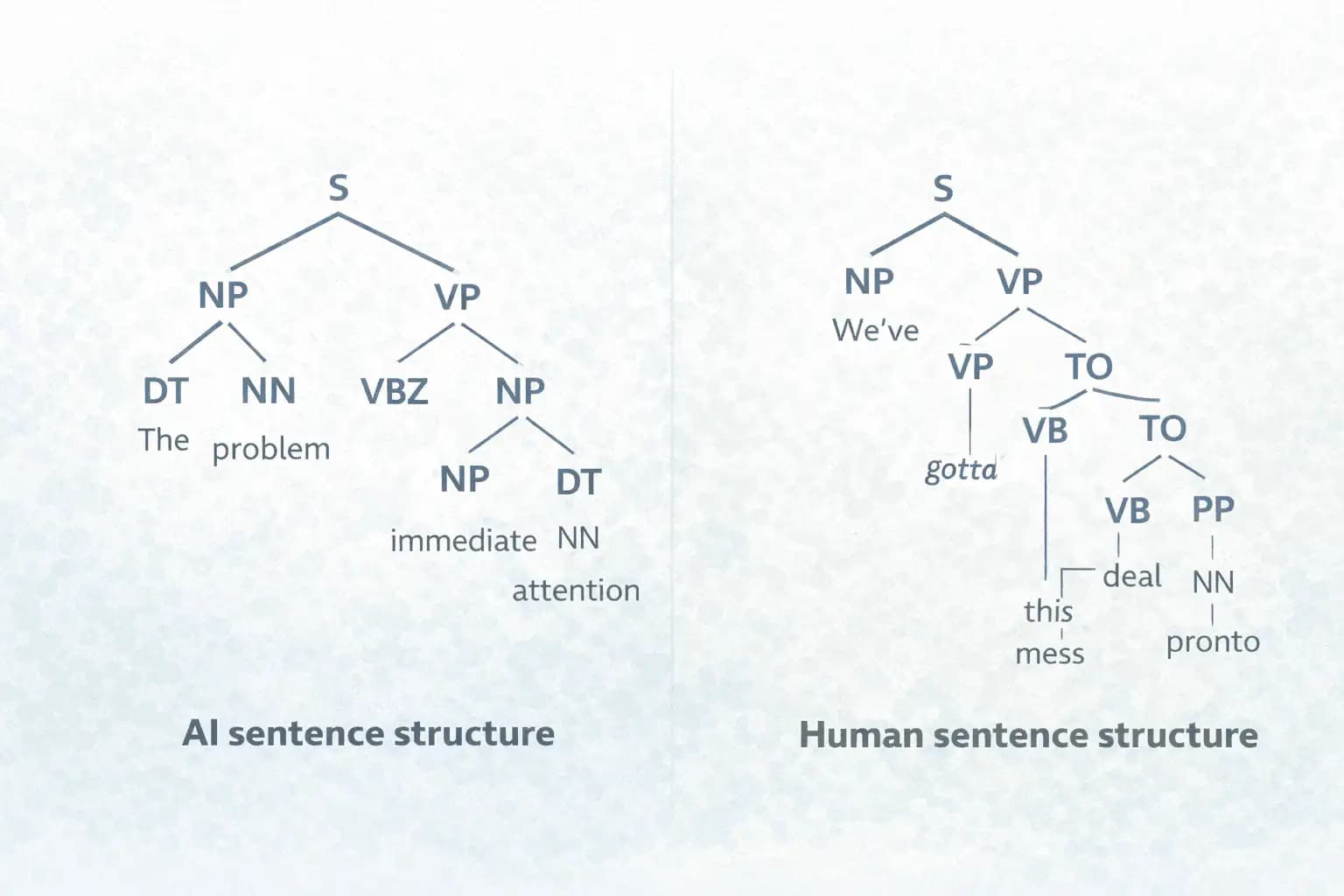
Syntax is how words are arranged to form sentences. AI-generated text tends toward grammatically uniform structures — subject-verb-object, each sentence neatly and consistently constructed. There's nothing technically wrong with this, but it doesn't reflect how real people write. Humans mix short punchy fragments with long rolling sentences. We start sentences with conjunctions. We use dashes and asides and self-interruptions. Winston AI measures syntactic diversity — or the lack of it — across your full text. A document that reads like a textbook example of correct grammar in every single sentence is paradoxically suspicious. Real writing has texture. Winston AI is trained to notice when that texture is missing.
Perplexity and Burstiness
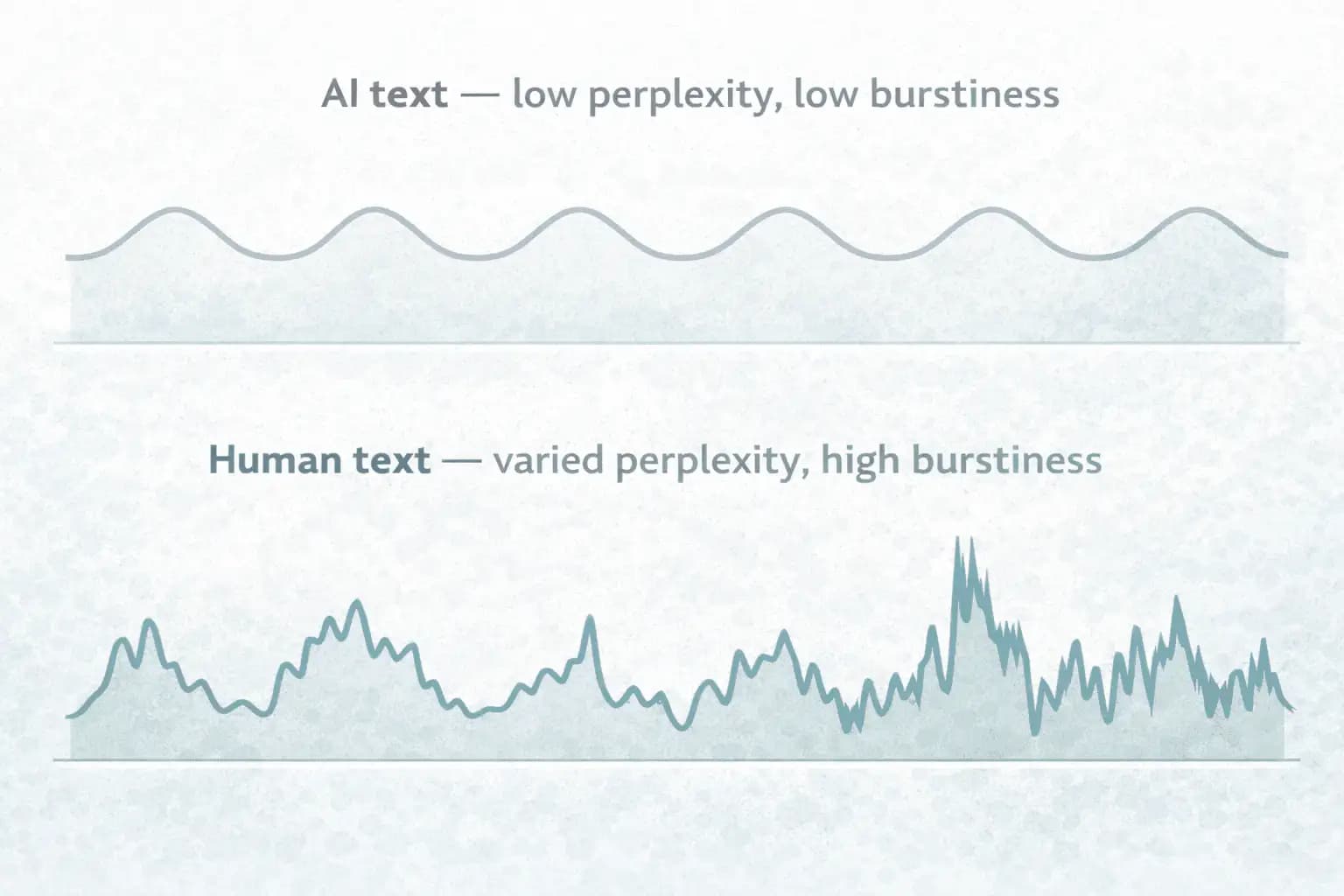
Perplexity measures how predictable the next word in a sequence is. AI language models are built to minimize perplexity — they choose words statistically likely given the preceding context, which makes AI text consistently low-perplexity. A trained model reading it can predict most of the next words before they arrive. Burstiness measures how much sentence length varies throughout a document. Humans write with naturally high burstiness — a short sharp sentence here, a long winding one there, a three-word sentence for emphasis. AI tends toward uniform sentence lengths, producing low burstiness. Winston AI measures both and flags documents that fall outside the expected human range on either metric.
Readability Score — The Flesch-Kincaid Factor
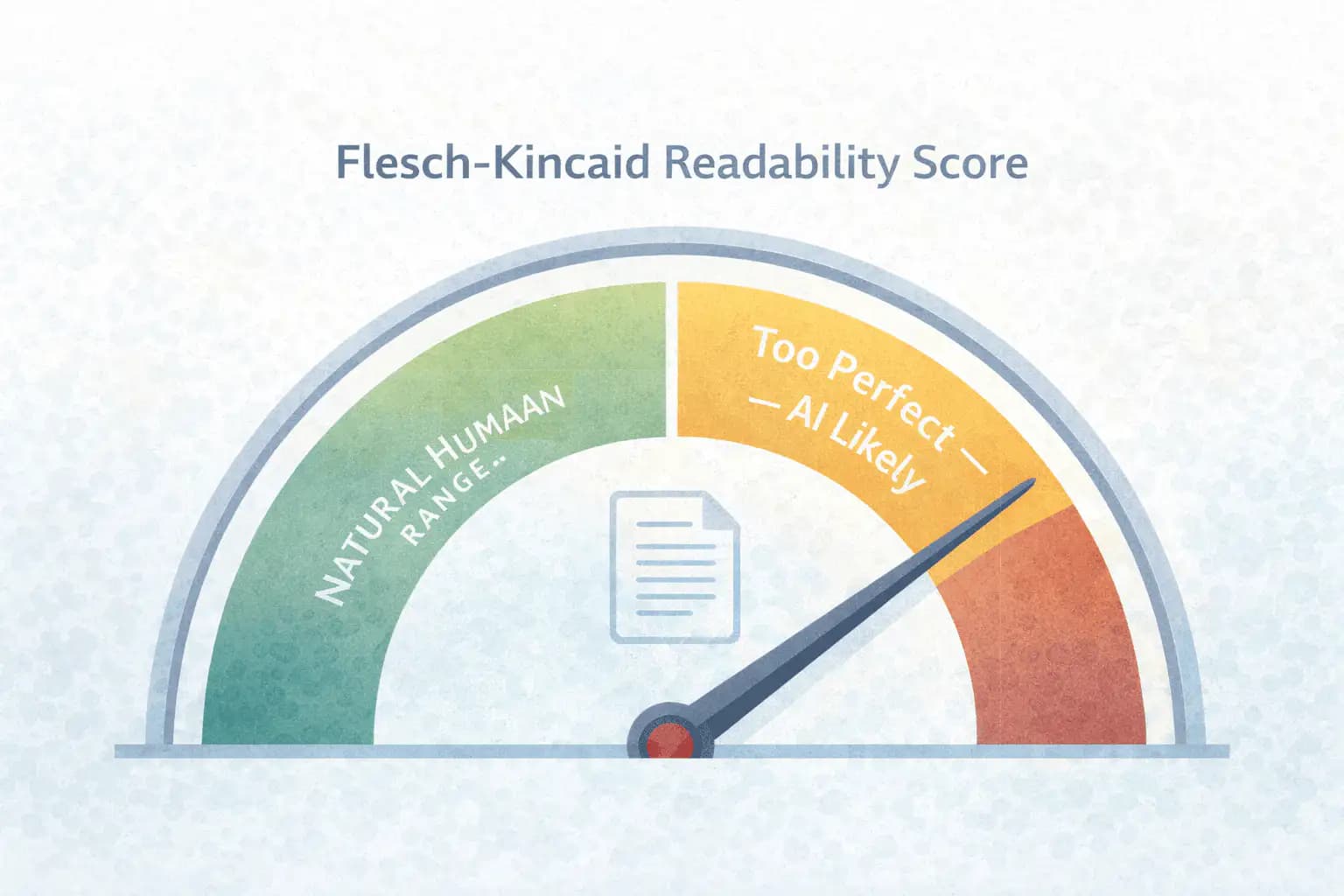
This is one of Winston AI's more distinctive signals. It uses the Flesch-Kincaid readability formula to evaluate how easy a document is to read — and it flags text that scores suspiciously high. AI models produce text with near-perfect readability scores. Sentences are clear, vocabulary is accessible, complexity is calibrated throughout. Real human writing — especially academic or professional writing — is often messier: longer constructions in some sections, simpler sentences in others, variable difficulty that reflects the way a real person's thinking develops across a long document. A document that scores 75/100 consistently across every section is actually more suspicious to Winston than one that varies between 55 and 85.
OCR and PDF Scanning
This is the feature that catches the most people off guard. Winston AI uses Optical Character Recognition to extract text from uploaded images, scanned PDFs, and even handwritten documents. That means you cannot print your AI-generated text, scan it, and upload it as a PDF to bypass detection — Winston reads straight through that layer. The OCR engine supports .jpg, .png, .tiff, .pdf, and .docx formats. If you submit a Word document, a scanned assignment, a screenshot of your text, or a photograph of a handwritten page, Winston still runs the full AI detection scan on the extracted content. Our humanizer restructures the text itself — so the output holds up regardless of what format you submit it in.

Prediction Map and Sentence-Level Flags
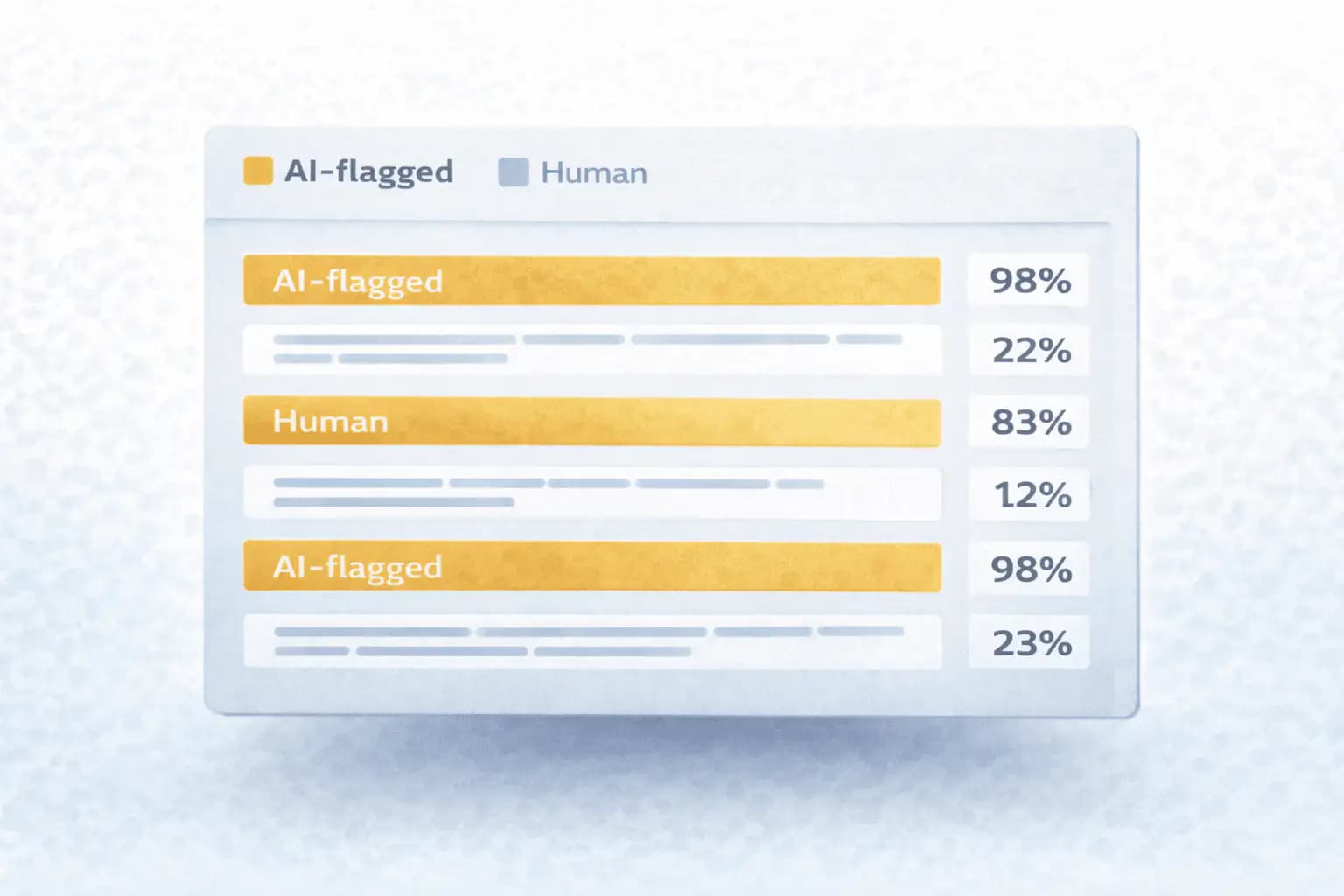
Winston AI's Prediction Map is a color-coded sentence-by-sentence breakdown of your Human Score. Every sentence in your document gets its own probability score — how likely that specific sentence was written by AI. The sentences pulling your overall score down are highlighted in the results panel with a percentage next to each. This is part of what makes Winston AI so trusted by educators and editors. They don't just get a number — they get a roadmap showing exactly which parts of a document triggered detection. Our humanizer specifically targets the sentence-level structural patterns that show up in those flagged sections, rebuilding them into the natural range Winston's model expects.
Why Winston AI Is One of the Hardest to Beat
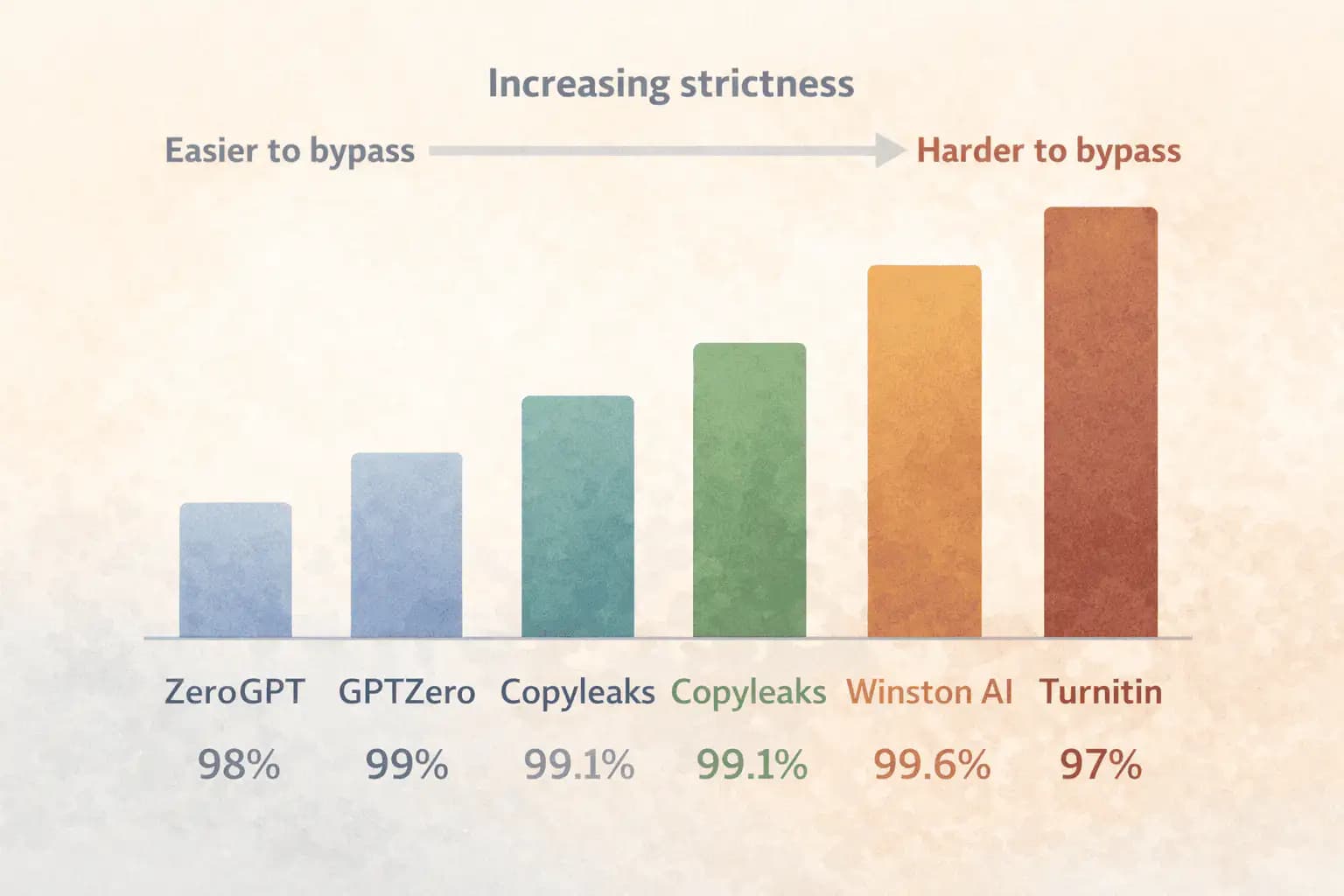
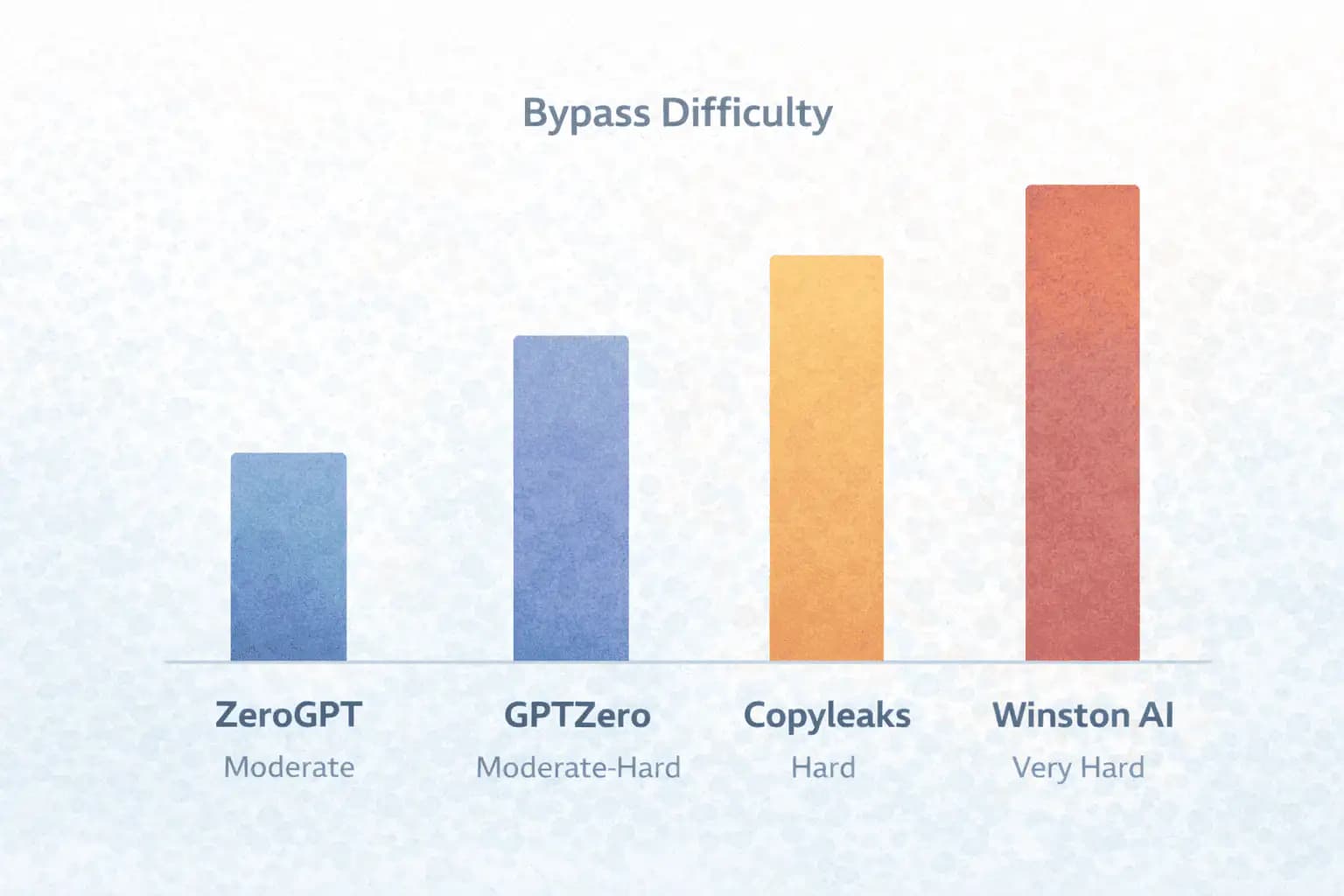
Most basic AI detectors rely on two or three signals: perplexity, burstiness, and maybe a phrase frequency check. If you can manipulate those metrics — by introducing varied sentence lengths and less predictable word choices — you can often get past tools like ZeroGPT or GPTZero.
Winston AI layers six or seven signals on top of those. It combines morphological analysis, semantic coherence checking, syntactic pattern detection, readability calibration, and sentence-level probability scoring simultaneously — and compares your text against what it claims is the largest human-reviewed training dataset in the industry.
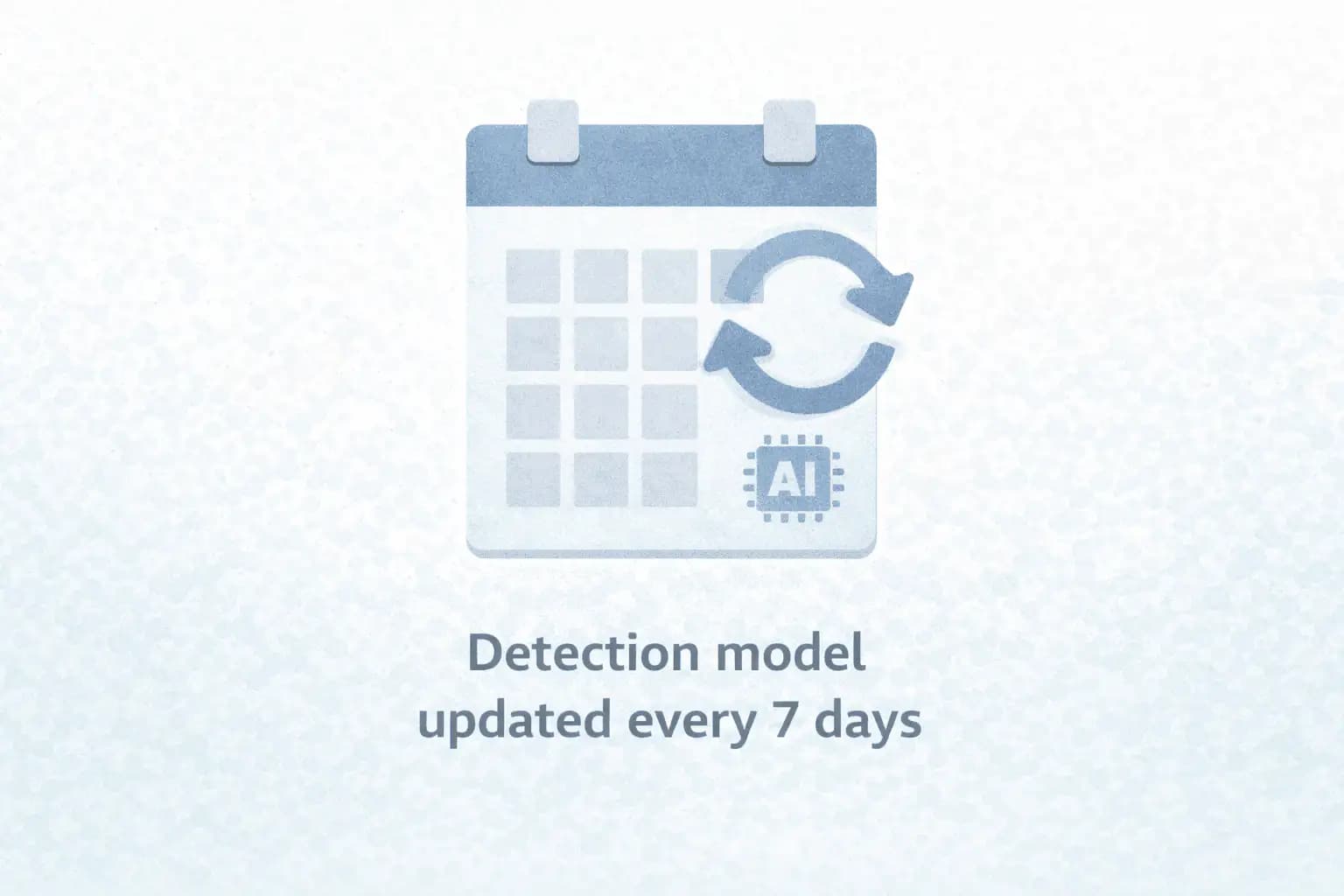
Its detection algorithms update every week. That's not a marketing claim — it's the reason Winston AI specifically includes the output of popular humanizer and paraphrasing tools in its training data. If you run your content through a basic paraphraser and then submit to Winston, there's a real chance it's been trained to recognize exactly that combination. Winston also claims the lowest false positive rate of any major detector — under 1%. That matters because institutions trust it enough to make consequential decisions based on its output: failing grades, rejected submissions, terminated freelance contracts. Beating it requires more than a synonym swapper.
Why Paraphrasing Fails on Winston AI
A lot of people's first instinct is to run their AI-generated content through QuillBot or a similar tool before submitting. It makes sense on paper — if you change the words, you change the fingerprint.
Not on Winston AI. Paraphrasing tools operate at the surface level: they swap synonyms, reorganize clauses, and vary sentence openers. What they don't change is the underlying structural logic of the text — the morphological patterns, semantic coherence signatures, and syntactic uniformity that Winston AI is specifically built to detect. You can change every word in a sentence and still keep the same sentence architecture, and Winston will still flag it.
There's a compounding problem with paraphrased output: it creates its own detectable fingerprints. QuillBot-style rewrites have specific syntactic signatures that Winston AI's weekly training updates include. In some cases, a QuillBot-processed document scores higher as AI than the original ChatGPT output did — because the model has been trained on exactly this combination of surface changes over unchanged deep structure.
What actually bypasses Winston AI is reconstruction at the morphological and syntactic level — rebuilding sentence logic, introducing natural semantic variation, calibrating readability variation, and producing the burstiness that real human writing generates. That's the level we work at.
How to Bypass Winston AI in 3 Steps
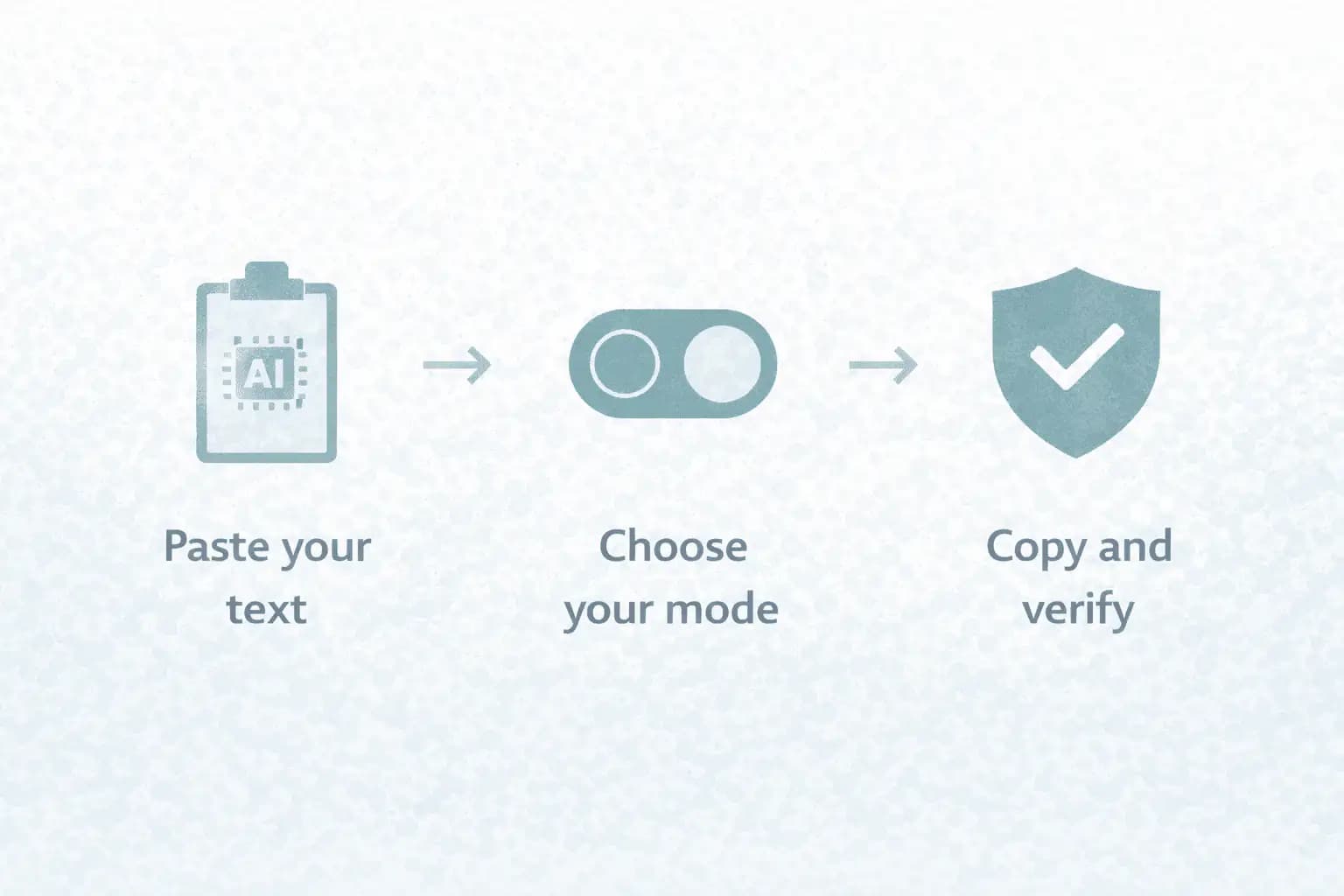
Step 1 — Paste Your AI-Generated Text
Copy your text from ChatGPT, Claude, Gemini, or whichever tool you used and paste it into our humanizer. No account setup, no login, no file upload required. The input field handles any volume — a single paragraph or a full 5,000-word report.
Step 2 — Select Your Humanization Mode
We offer five humanization modes, each calibrated for different contexts. For Winston AI — which is heavily used in academic and publishing environments — Academic mode is the most effective. It introduces the specific syntactic variation, semantic nuance, and readability range that Winston AI associates with genuine human academic writing. Formal mode works for business documents and client deliverables. Creative mode is best for blog content and marketing copy. Standard handles general-purpose content. Fast prioritizes speed while maintaining a solid pass rate.
Step 3 — Copy, Verify, and Submit
Your rewritten content is ready in seconds. Paste it into Winston AI's free scanner to verify your Human Score before you submit anywhere. Most users score 95–100% human on the first pass. If a specific sentence still flags on Winston's Prediction Map, paste just that section back in, rerun it in Academic mode, and replace it.
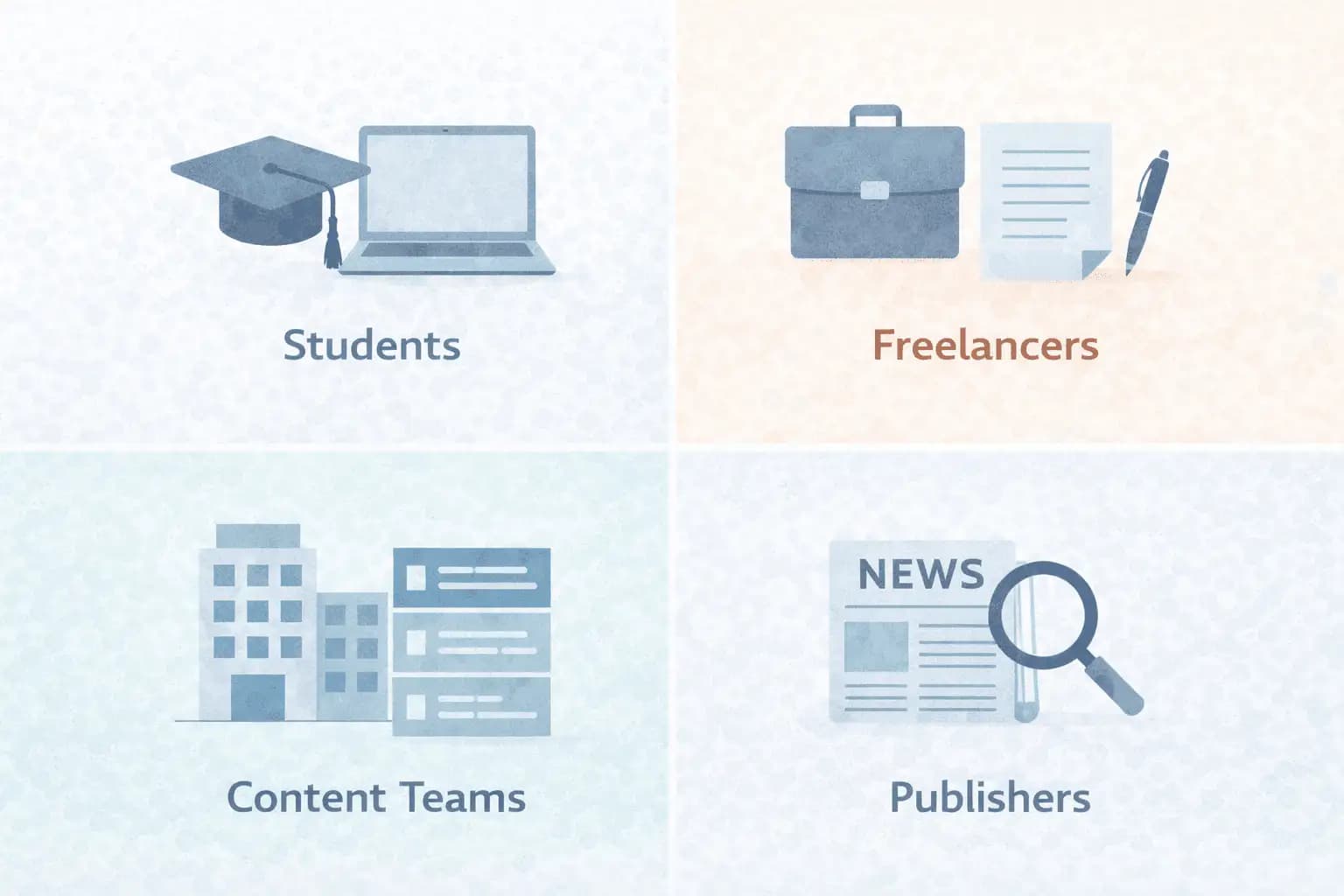
Who Uses This Humanizer: Students and Graduate Researchers
Winston AI was designed with academic use in mind. It's integrated into university platforms and LMS systems across North America, Europe, and Australia. Many integrity checks that students never see — "originality reports," "submission reviews," "plagiarism scans" — are running Winston AI under the hood.
Submitting AI-assisted content without humanizing it first is a real risk. It doesn't matter how much you edited by hand after generating it — if the underlying morphological and syntactic patterns still read as AI-generated, Winston will flag it. Our Academic mode is specifically tuned to the kind of formal, varied, human-sounding writing that scores clean on Winston's sentence-level Prediction Map.
Who Uses This Humanizer: Freelance Writers and Content Creators
Clients are increasingly running AI checks before releasing payment. Winston AI is popular with marketing agencies and content managers because it produces a shareable PDF report — a timestamped professional document saved as evidence that content was flagged. Getting flagged means a rejected deliverable and a damaged working relationship.
Our humanizer produces content that scores 100% human on Winston's scan and reads naturally — not stiff, not over-edited. Your original meaning stays intact. The restructuring happens at the linguistic level, not the content level.
Who Uses This Humanizer: Content, SEO Teams, and Publishers
Content and SEO Teams
Google evaluates content quality, not AI origin. But your clients may not share that nuance. Winston AI is used by agencies and brand managers to audit freelance submissions before publication. A high AI score on Winston's report is often grounds for rejection regardless of how well-written the content is. Humanizing before delivery takes 20 seconds per document and eliminates the back-and-forth of flagged content being returned for rewrites.
Publishers and Editorial Teams
Academic journals, independent publishers, and digital media outlets use Winston AI to screen submissions before they reach an editor's desk. Documents that score low on the Human Score often get auto-rejected in volume-processing environments — the editor never reads them. Getting a clean score on Winston is about making sure your work survives the first filter and gets evaluated on its actual content.
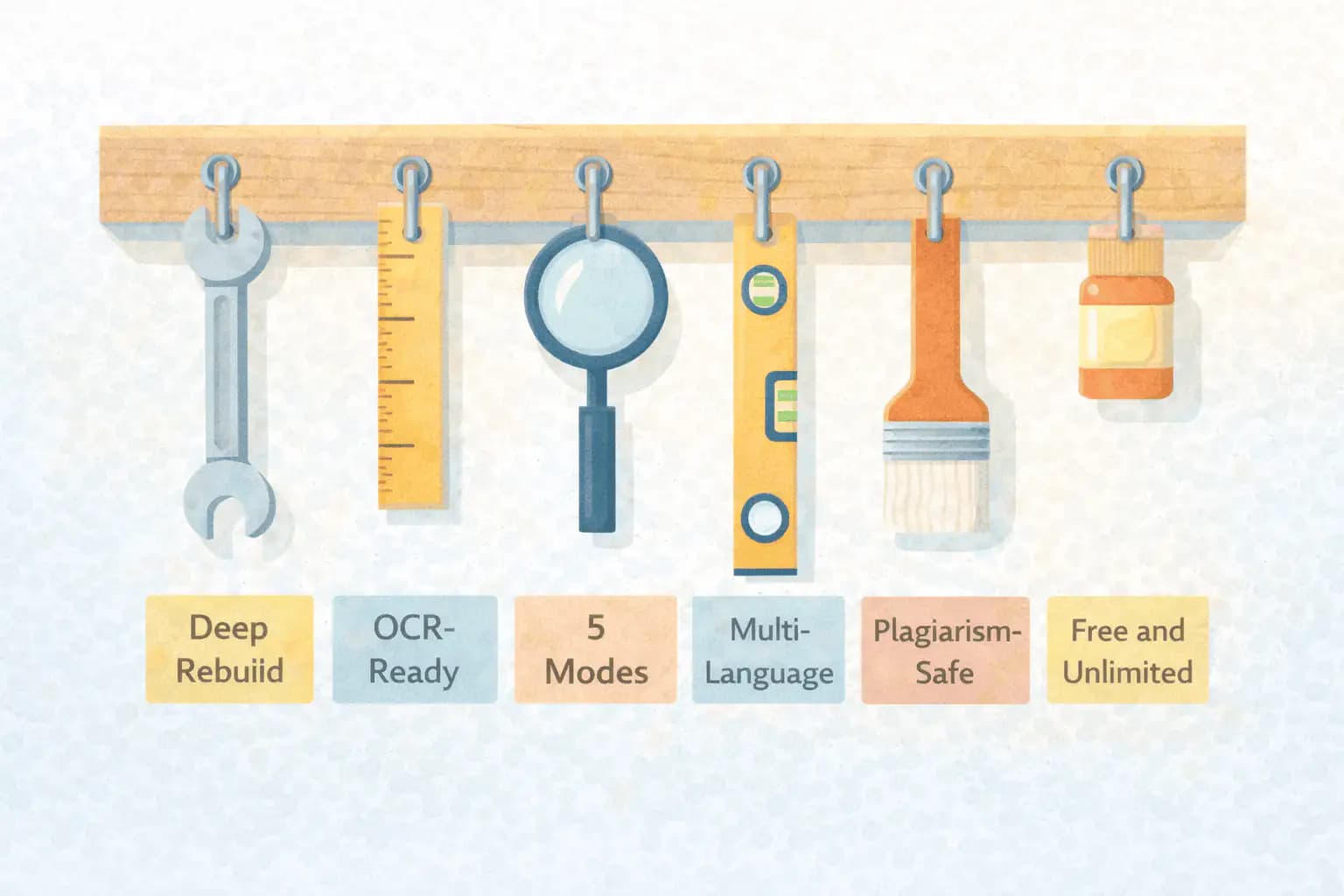
Deep Linguistic Reconstruction and Sentence-Level Accuracy
Deep Linguistic Reconstruction — Not Just Paraphrasing
Our engine doesn't swap words. It analyzes the morphological, syntactic, and semantic structure of your text and rebuilds at each of those levels — the same layers Winston AI scans during detection. The result is text that doesn't just sound different; it has a different structural fingerprint.
Clears Winston's Sentence-Level Prediction Map
Because we rebuild at the sentence level, our output doesn't just improve the overall Human Score — it clears individual sentence flags in Winston's Prediction Map. Sentences that would have scored 90%+ AI get rebuilt to fall within the natural human range Winston's model expects.


OCR-Proof Output and Five Humanization Modes
OCR-Proof Output
Winston AI reads through PDFs and scanned images using OCR. Our humanizer works at the text level, so whether you paste content directly, upload a .docx, convert to PDF, or submit as a scanned document, the restructured text holds up at every format layer.
Five Humanization Modes
Standard, Formal, Academic, Creative, and Fast — each adjusts how our engine weights different linguistic features during reconstruction. Academic mode prioritizes syntactic diversity, readability variation, and semantic coherence. Formal preserves professional register while eliminating AI-pattern uniformity. Creative injects casual rhythm and tonal variety.
11-Language Support, Readability Calibration, and Free Access
11-Language Support
Winston AI detects AI content in 11 languages. Our humanizer produces natural, passing output in English, French, Spanish, Portuguese, German, Dutch, Polish, Italian, Indonesian, Romanian, and Chinese. The reconstruction is calibrated per language — not a translation wrapper applied to English output.
Readability Calibration
Because Winston AI flags text with unnaturally perfect Flesch-Kincaid scores, our engine deliberately introduces the kind of readability variation that appears in real human writing. The output reads well — it just varies naturally across sections in the way genuine human authorship does.
No Signup. No Word Limits. Free.
No account, no trial period, no cap on volume. Paste any amount of text, choose your mode, copy your output, and verify in Winston AI before submitting.

How We Compare to Other Humanizers
<div class='overflow-x-auto'><table class='w-full text-sm border-collapse'><thead><tr><th class='text-left py-3 px-4 bg-slate-100 font-semibold border border-slate-200'></th><th class='text-left py-3 px-4 bg-slate-100 font-semibold border border-slate-200'>Our Humanizer</th><th class='text-left py-3 px-4 bg-slate-100 font-semibold border border-slate-200'>QuillBot</th><th class='text-left py-3 px-4 bg-slate-100 font-semibold border border-slate-200'>Basic Paraphrasers</th></tr></thead><tbody><tr><td class='py-3 px-4 border border-slate-200 font-medium'>Winston AI pass rate</td><td class='py-3 px-4 border border-slate-200'>97%+</td><td class='py-3 px-4 border border-slate-200'>~35–45%</td><td class='py-3 px-4 border border-slate-200'>~20–30%</td></tr><tr class='bg-slate-50'><td class='py-3 px-4 border border-slate-200 font-medium'>Sentence-level reconstruction</td><td class='py-3 px-4 border border-slate-200'>✅ Yes</td><td class='py-3 px-4 border border-slate-200'>❌ No</td><td class='py-3 px-4 border border-slate-200'>❌ No</td></tr><tr><td class='py-3 px-4 border border-slate-200 font-medium'>Readability calibration</td><td class='py-3 px-4 border border-slate-200'>✅ Yes</td><td class='py-3 px-4 border border-slate-200'>❌ No</td><td class='py-3 px-4 border border-slate-200'>❌ No</td></tr><tr class='bg-slate-50'><td class='py-3 px-4 border border-slate-200 font-medium'>OCR-proof output</td><td class='py-3 px-4 border border-slate-200'>✅ Yes</td><td class='py-3 px-4 border border-slate-200'>❌ No</td><td class='py-3 px-4 border border-slate-200'>❌ No</td></tr><tr><td class='py-3 px-4 border border-slate-200 font-medium'>Multilingual (11 languages)</td><td class='py-3 px-4 border border-slate-200'>✅ Yes</td><td class='py-3 px-4 border border-slate-200'>Partial</td><td class='py-3 px-4 border border-slate-200'>Partial</td></tr><tr class='bg-slate-50'><td class='py-3 px-4 border border-slate-200 font-medium'>Free, no signup</td><td class='py-3 px-4 border border-slate-200'>✅ Yes</td><td class='py-3 px-4 border border-slate-200'>❌ Paid tiers</td><td class='py-3 px-4 border border-slate-200'>Varies</td></tr><tr><td class='py-3 px-4 border border-slate-200 font-medium'>Maintains original meaning</td><td class='py-3 px-4 border border-slate-200'>✅ Yes</td><td class='py-3 px-4 border border-slate-200'>Partial</td><td class='py-3 px-4 border border-slate-200'>Partial</td></tr></tbody></table></div>
What People Are Saying
"Winston AI kept flagging my thesis introduction even after I rewrote it twice by hand. Academic mode fixed it in one pass. Came back 98% human. I actually cried." — Master's student, Edinburgh
"My agency clients started using Winston AI to audit deliverables before paying. This is the last step of my workflow on every piece now. Faster than editing manually and my pass rate is 100%." — Freelance content strategist
"We run Winston on every journal submission. Since we started recommending this humanizer to flagged authors, re-submission scores consistently come back above 95%. It removes the detection problem without changing the quality of their work." — Managing editor, academic press
96% of users score above 90% Human on their first Winston AI pass. Average processing time: under 20 seconds.
Frequently Asked Questions
Does Winston AI detect ChatGPT-generated content?
Yes. Winston AI detects content from ChatGPT (all versions), Claude, Gemini, LLaMA, and all other major LLMs it has been trained on. Importantly, it doesn't train on specific model outputs — it trains on the underlying text generation techniques those models share. That means when a new AI model launches, Winston can often detect its output immediately if it uses familiar generation methods.
How accurate is Winston AI?
Winston AI claims 99.98% accuracy on its Advanced Scan. Independent tests show real-world accuracy between 75–99% depending on content type, text length, and how much the content has been edited after generation. Winston performs best on academic essays and formal reports. It's slightly weaker on very short texts (under 300 words) and on highly technical content with specialized vocabulary. Claimed false positive rate is under 1%.
Can Winston AI scan PDFs and uploaded documents?
Yes. Winston AI accepts .docx, .pdf, and .txt files, as well as URL imports. Its OCR engine also extracts text from scanned images (.jpg, .png, .tiff) and even handwritten pages. Submitting your AI-generated content as a PDF does not protect you — Winston reads the text inside. Our humanizer restructures the text itself, so the output holds up regardless of the file format submitted.
Does Winston AI detect paraphrased AI content?
Yes — this is one of its specific strengths. Winston AI is explicitly trained to catch content run through tools like QuillBot. Its weekly model updates include training data from the output of popular paraphrasing and humanizer tools. QuillBot-processed content typically still scores 35–65% AI on Winston's scanner. Our tool addresses the underlying structural signals paraphrasing doesn't fix.
What is the Winston AI Human Score?
The Human Score is Winston AI's primary output — a 0–100 probability rating of how likely the text was written by a human. A score of 0 means Winston is confident the content is AI-generated. A score of 100 means it reads as entirely human-written. Most institutions flag content scoring below 70–80 as concerning. Our humanizer consistently produces content scoring 95–100 on Winston's Human Score.
Why does Winston AI sometimes flag human writing?
Winston AI's false positive rate is under 1%, but users with very formal, highly structured writing styles occasionally get flagged. This happens when writing is unusually uniform in sentence length, syntax, or vocabulary — patterns that statistically overlap with AI output. If you're a human writer getting flagged, our tool can smooth those over-structured patterns without changing the meaning or substance of your work.
Is Winston AI harder to bypass than Turnitin or Copyleaks?
Winston AI is considered one of the hardest detectors to bypass, alongside Turnitin. Copyleaks and GPTZero focus on fewer statistical signals. Winston AI simultaneously combines morphological, semantic, syntactic, and readability analysis — and updates its model weekly. Turnitin is specifically hardened for academic environments. Our humanizer is effective against both.
Does Winston AI support other languages besides English?
Yes — Winston AI supports 11 languages: English, French, Spanish, Portuguese, German, Dutch, Polish, Italian, Indonesian, Romanian, and Chinese (Simplified). Our humanizer supports the same languages with language-specific reconstruction models, not translations of English-model output.
What makes Winston AI different from ZeroGPT or GPTZero?
ZeroGPT and GPTZero rely primarily on perplexity and burstiness metrics. Winston AI adds morphological analysis, semantic coherence checking, syntactic pattern detection, Flesch-Kincaid readability calibration, and sentence-level probability scoring on top of those. It also updates weekly, has a broader human-reviewed training dataset, and supports OCR scanning — capabilities neither ZeroGPT nor GPTZero currently match.
Is it really free to bypass Winston AI with your tool?
Yes — completely free, no signup, no word limit. Paste your text, choose a mode, copy your output, and test it in Winston AI's free scanner before you submit anywhere. No email address, no trial period, no paywall.
Paste Your Text. Get 100% Human. Submit with Confidence.
Winston AI is strict. It updates every week. It scans from the word level to the readability curve, across every sentence, and through any file format you throw at it. Most humanizer tools don't get past it because they only address the surface. Ours does, because we built it to address exactly what Winston actually scans for.
Paste your text, pick Academic mode, and verify your Human Score before you submit. It takes 20 seconds. It changes the result.